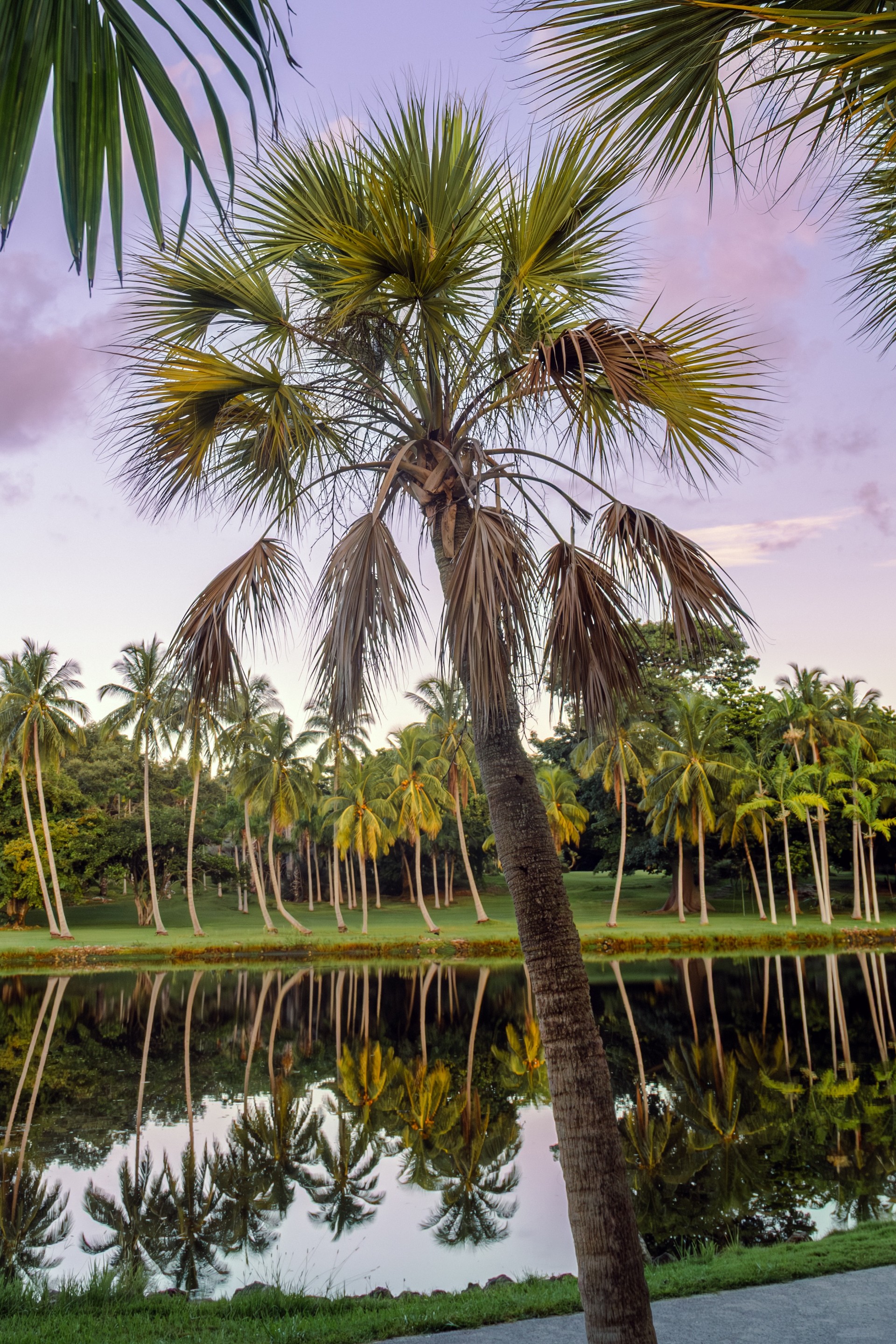
As rising seas and saltier soils threaten one of Florida’s most iconic symbols, scientists are racing to protect Florida’s state tree.
The cabbage palm — or Sabal palmetto — officially the Florida state tree since 1953, is a defining feature of the state’s coastal landscapes. Even in all its glory, this quintessential giant is not spared from the growing threats of sea-level rise and salt exposure, according to Amir Khoddamzadeh of FIU's Institute of Environment, an associate professor of environmental horticulture in the Department of Earth and Environment. In a new study in HortScience, he takes a closer look at how these challenges affect young seedlings of cabbage palms and proposes a simple solution that could help stave off catastrophic damage — silicon.
Khoddamzadeh’s curiosity about the cabbage palms’ salt tolerance began on a typical humid, rain-soaked day at the Montgomery Botanical Center in Coral Gables. Wandering the grounds, he noticed entire swaths of palmettos standing in water — a sight that stopped him in his tracks. One pressing question followed: what will become of Florida’s Sabal palmettos in 20 or 30 years if young palms can’t survive rising salinity?
To find answers, Khoddamzadeh teamed up with Patrick Griffith, executive director of Montgomery Botanical Center, and Madhugiri Nageswara-Rao, a geneticist at the USDA ARS Subtropical Horticulture Research Station in Miami. They set their sights on silicon, a powerful ally known for its resilience-boosting properties. With its sponge-like ability to retain water, silicon offers a lifeline for vulnerable young palms by improving physiological processes. Already widely used — even by NASA to grow plants in space — it’s both commercially accessible and affordable, making it a perfect candidate for helping palms survive salinity.
“We wanted to work on something that ornamental plant nursery producers and landscapers can use,” Khoddamzadeh said.
It’s also simple to apply. Just few grams mixed with water can help young plants survive all kinds of stressors.
To test the approach, the team grew 96 one-year-old seedlings in a greenhouse for 12 months, watering them with varying salt levels, adding silicon to the soil in different amounts and tracking everything from soil nutrients, plant growth and development to survival rates. Silicon not only improved the palms’ tolerance to salt but also boosted chlorophyll content — giving them a deeper green hue — and increased leaf production.
The study also established the ecological threshold for seedling survival — a critical finding for future restoration efforts.
“Bringing together the unmatched palms at Montgomery and the fantastic student enthusiasm at FIU is what made it all work,” said Griffith. “I am thrilled to see all the ways that our garden and the university bring these findings to the community. And the fact that this project was student-led is a real bonus — we love seeing the next generation of plant people succeed.”
It’s easier to invest in healthy soils by using sustainable materials like silicon, according to Khoddamzadeh. The alternative is an increasing amount of fertilizer, which becomes problematic when rainfall carries excess nutrients into waterways and Biscayne Bay. Planting adult trees, which are more stress-tolerant, is another option for greater resilience. He also suggests communities plant more native species that can absorb or slow salinity intrusion before it reaches cabbage palms.
Griffith said resilience can be as simple as paying attention to palms, taking action when they show signs of stress and being mindful of the best spots for new plantings.
Cabbage palms play a major role in Florida’s ornamental trade, a multi-billion-dollar industry. They also support the state’s nursery and landscaping industries, which together generate more than $30 billion and more than 260,000 jobs annually, according to the research. They also provide habitat, food and nesting material for countless native species. A threat to their survival could be a threat to the stability of entire ecosystems.
The study is part of a broader effort to understand how specialty crops resist salinity — because if the palm’s growth is negatively affected, the impact could be even harsher on other landscaping, ornamental plants and food crops.
Ongoing collaborations among FIU, the Montgomery Botanical Center and the USDA include testing crops like tomatoes, jalapeños, peppers, cabbage, snap beans and sweet corn — all with the goal of helping Florida’s agriculture and landscapes adapt to rising sea levels.