

Common ADHD classroom accommodations may not help students succeed, FIU study finds
Extra time, frequent breaks and quiet workspaces are among the most common supports for students with attention-deficit/hyperactivity disorder. But a new study of 255 children suggests these approaches may do little to improve classroom behavior or academic performance. FIU researchers say schools should put greater emphasis on strategies that help children build skills and succeed.
Extra time on assignments. Frequent breaks. A quiet place to work.
For students with attention-deficit/hyperactivity disorder (ADHD), these are some of the most common accommodations schools provide to make learning easier. But are they actually helping children succeed?
A new study from Florida International University (FIU) suggests that some widely used approaches may be falling short.
Researchers at FIU's Center for Children and Families evaluated four common classroom accommodations: extended time to complete assignments, frequent breaks, standing at a desk and working in a low-distraction environment. They found that none significantly improved classroom behavior or academic performance among children with ADHD.
"We were surprised that none of the accommodations we tested had a significant effect, even when combined with behavioral interventions or medication," said Gregory Fabiano, professor of psychology at FIU and lead author of the study.
The research, published in JAMA Pediatrics, involved 255 children with ADHD in kindergarten through sixth grade who participated in FIU's Summer Treatment Program between 2022 and 2025.
Researchers measured classroom rule violations, completed assignments and quiz scores under different treatment conditions.
While the accommodations showed no significant benefits, behavioral interventions and stimulant medication made a measurable difference.
Behavioral interventions reduced rule violations during independent work by 37%, while stimulant medication reduced them by 61%, compared with when children received neither treatment. Medication also helped children complete more work and earn higher quiz scores.

Why aren't common ADHD accommodations working?
Many classroom accommodations are designed to address ADHD symptoms, such as difficulty paying attention, staying focused or remaining seated. But Fabiano says reducing these symptoms doesn't necessarily address the challenges that interfere with a child's ability to learn and complete schoolwork.
Take extended time, for example. Giving a student more time to finish an assignment sounds reasonable. But for a child who already struggles to stay focused and complete tasks, simply extending the deadline may not solve the underlying problem.
"These approaches fail to build skills or address motivation," Fabiano said.
The distinction is important. Accommodations typically change the conditions in which a student learns or completes a task. Behavioral interventions, on the other hand, help children develop and practice skills by reinforcing the behaviors that support learning.
That doesn't mean accommodations are never useful. Some children may benefit from specific supports, depending on their individual needs. Rather, the findings challenge the assumption that the same accommodations will work for every student with ADHD.
"There may be times when accommodations may be helpful, but a 'one size fits all' approach to ADHD doesn't seem to be effective," Fabiano said.
What helps children with ADHD succeed in the classroom?
Fabiano recommends putting greater emphasis on positive behavioral supports, many of which teachers can incorporate into everyday classroom routines.
Simple strategies such as praising appropriate behavior, setting clear expectations and providing consistent feedback can help children understand what's expected of them and stay motivated to meet those expectations.
Daily report cards are another tool. Teachers can use them to establish individual goals, track a student's progress and provide regular feedback. Children receive positive reinforcement for meeting their goals, while parents can stay informed about how their child is doing at school.
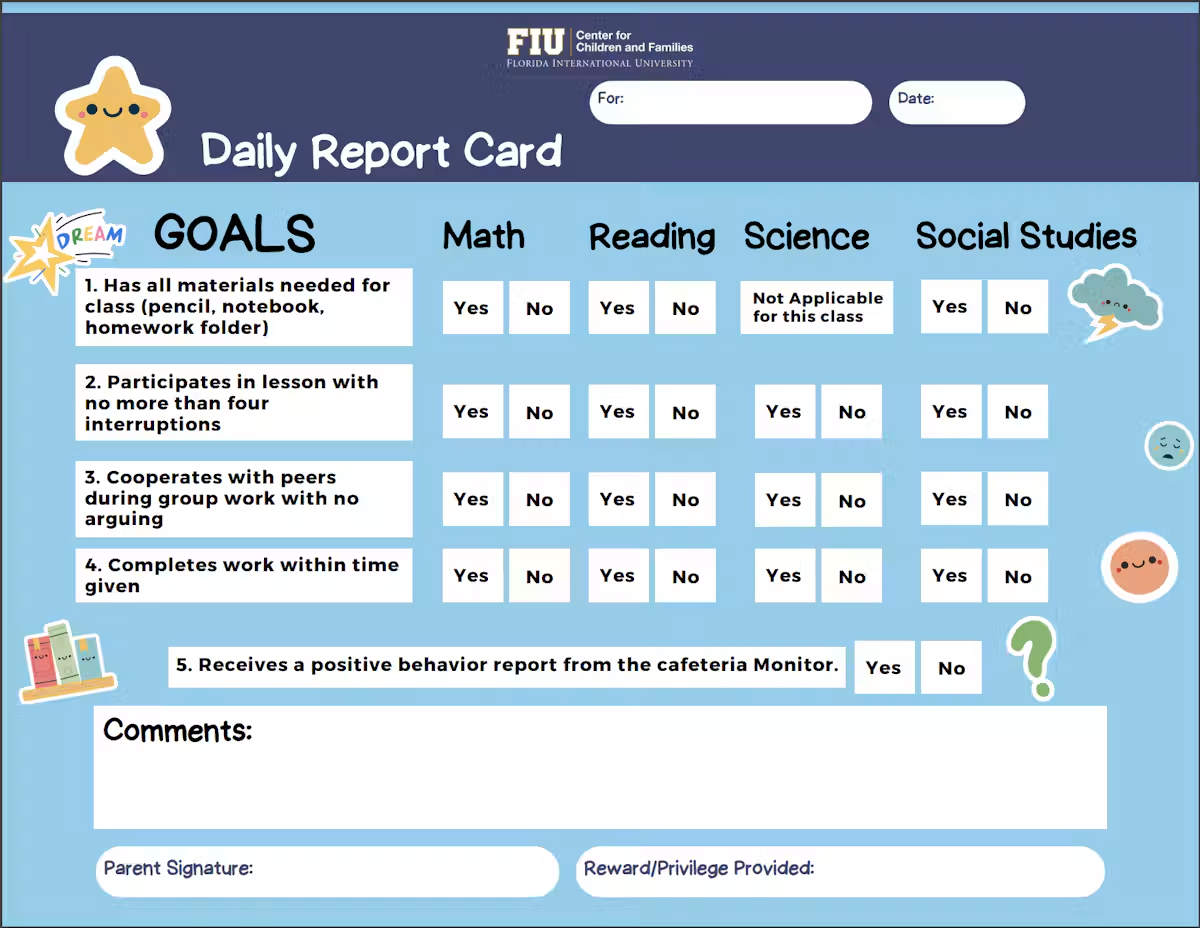
Rather than simply giving a student more time to finish an assignment, for example, a teacher might set a specific goal for completing the work, check in regularly and recognize the student's progress.
These approaches focus on helping children practice and strengthen the behaviors that support learning, rather than simply changing the environment around them.
The findings also raise questions about the use of common accommodations in Individualized Education Programs (IEPs) and Section 504 plans, which are tailored to each student's needs.
Fabiano believes schools should place greater emphasis on behavioral interventions in general education classrooms, where most children with ADHD spend much of their school day, including students who receive special education services.
Parents can also work with teachers to ensure their child's IEP or 504 plan reflects their individual needs and includes strategies that are making a meaningful difference.
Building on a legacy of ADHD research
The study builds on the work of the late William E. Pelham, Jr., founding director of the Center for Children and Families and a pioneer in ADHD research and treatment.
Pelham, who helped design and implement the latest study, was instrumental in establishing behavioral therapy and medication as evidence-based treatments for children with ADHD. His research through FIU's Summer Treatment Program helped lay the groundwork for the questions addressed in the current study.
His work challenged long-held assumptions about ADHD treatment.
In a 2022 study, Pelham and his colleagues found that while stimulant medication improved classroom behavior and productivity, it did not significantly improve how much new material children learned.
His earlier work also found that starting with behavioral interventions was more cost-effective than beginning with medication. These studies, along with the current one, are part of his legacy ensuring rigorous research studies are used to evaluate the best approaches for making a difference in the daily lives of children with ADHD.
Why getting ADHD support right matters
An estimated 7.1 million children in the United States — nearly 12% of those ages 3 to 17 — had a current ADHD diagnosis in 2024, according to the Centers for Disease Control and Prevention. Many receive additional support at school through IEPs and Section 504 plans.
For children with ADHD, difficulties with attention, organization and completing schoolwork can affect more than their grades. Academic challenges can shape their educational opportunities and have lasting consequences for their futures.
"We've been working to help children with ADHD succeed in school for decades, but their long-term academic outcomes still aren't where we'd like them to be," Fabiano said.
"We need to rethink how we're supporting these students, with greater emphasis on effective treatments in everyday classrooms rather than relying so heavily on accommodations. Every child with ADHD deserves the opportunity to succeed and feel proud of what they've accomplished in the classroom, and it is our job to make sure we give them the best chance for that."