

Conservation team rescues endangered antelopes stranded on grounded plane
When an international flight carrying eight critically endangered mountain bongo antelopes encountered an unexpected delay, a dedicated conservation team turned a moment of uncertainty into a successful rescue during an early February morning.
Bound for Kenya, the flight was taxiing for departure the night before at Palm Beach International Airport when a mechanical issue caused the pilot to return to the gate. After four hours of diagnostics by the operator, SkyTaxi, the flight was canceled. The eight crated and tranquilized bongos remained onboard.
The bongos — five females and three males — were born and raised at Rare Species Conservatory Foundation (RSCF) in Loxahatchee, FL under the care of its director, Paul Reillo and RSCF operations director and FIU alumnus Matt Morris. Reillo is a research professor at FIU and director of the university’s Tropical Conservation Institute. The Florida-born bongos are part of a complex, long-term recovery effort for this critically endangered species in Kenya, the only native habitat for the species.
When Reillo was contacted overnight by the charter company, Air Charter Services, that it would be at least another day before the flight could be rescheduled, he knew the animals had to return to RSCF.
Transporting the endangered bongo antelopes from Florida to Kenya requires months of preparation, precisely timed tranquilization and supportive care, and strict adherence to schedules. The carefully choreographed journey from Florida to a new bongo sanctuary on Mt. Kenya takes at least 30 hours. Any significant delay or flight cancellation becomes a matter of life or death for the animals.
Morris was on board with the animals along with an attending veterinarian. Both were required to disembark once the flight was grounded shortly after midnight but the flight operator assured them the aircraft would remain ventilated while the bongo remained onboard. Reillo mobilized a rescue team, including the ground-transport driver and a 54-foot flatbed truck owned and operated by Walpole Feed & Supply in Okeechobee.
At first light, Reillo and the driver arrived at the disabled aircraft, discovering it was without power and the cargo door closed, leaving the crated animals without ventilation.
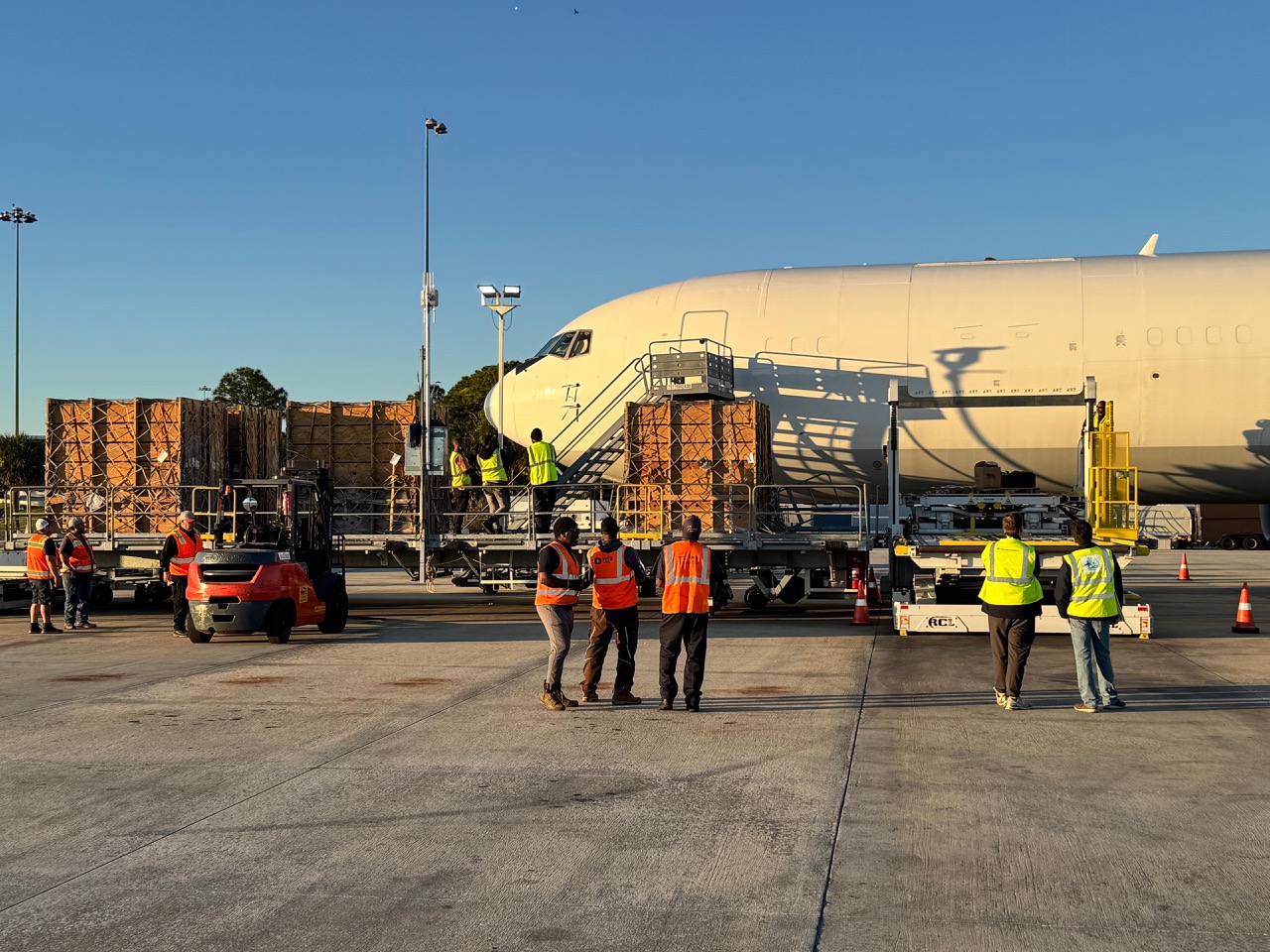
Crates of endangered mountain bongo antelopes are removed from the grounded plane after being stranded overnight.
“The cargo area was hot and stuffy,” Reillo said. “I realized we would soon have a disaster without immediate action. Thankfully the animals were offloaded onto the flatbed and safely returned to RSCF by 9 a.m. Sunday morning. The bongo spent 14 hours on the plane. They were exhausted and stressed but successfully returned to their Florida home.”
The mountain bongo, the largest forest antelope native only to Kenya, has experienced a devastating population decline in the past 80 years due to poaching, forest degradation and habitat fragmentation. The species is listed by the International Union for Conservation of Nature as a critically endangered sub-species. Currently, less than 100 remain in the wild. In support of Kenya’s Bongo National Recovery and Action Plan, RSCF intends to send a shipment of bongos to Kenya and help support breeding so future generations can be sustainably reintroduced into Mt. Kenya’s forests.
These eight bongos were meant to join 17 others that successfully made the trip from Florida to Kenya last February on a flight sponsored by DHL. All are part of a comprehensive, ongoing effort to repatriate bongos raised in semi-wild conditions at RSCF to a protected wildlife sanctuary on Mt. Kenya. The sanctuary, managed by the Meru Bongo and Rhino Conservation Trust, a Kenyan NGO, is a conservation milestone, engaging international NGOs, local and national government, and local Kenyan communities. Ultimately, the program aims to restore mountain bongo across their ancestral forest habitat in Kenya.
“The bongo recovery program here in Meru, Kenya is our 21st century moment to reverse extinction,” said John Kinoti, chairman of the Meru Bongo and Rhino Conservation Trust. “Repatriating the bongos from RSCF to Kenya is a true rebirth and hope for the critically endangered mountain bongo.”
Because temperature and weather conditions in both Florida and Kenya must align when transporting the bongos, Reillo said the window to repatriate another group for 2026 has now closed. In addition, animals from the aborted flight cannot be prepared for transport again for months. They were carefully selected months ago based on age, gender, breeding and health history and disposition.
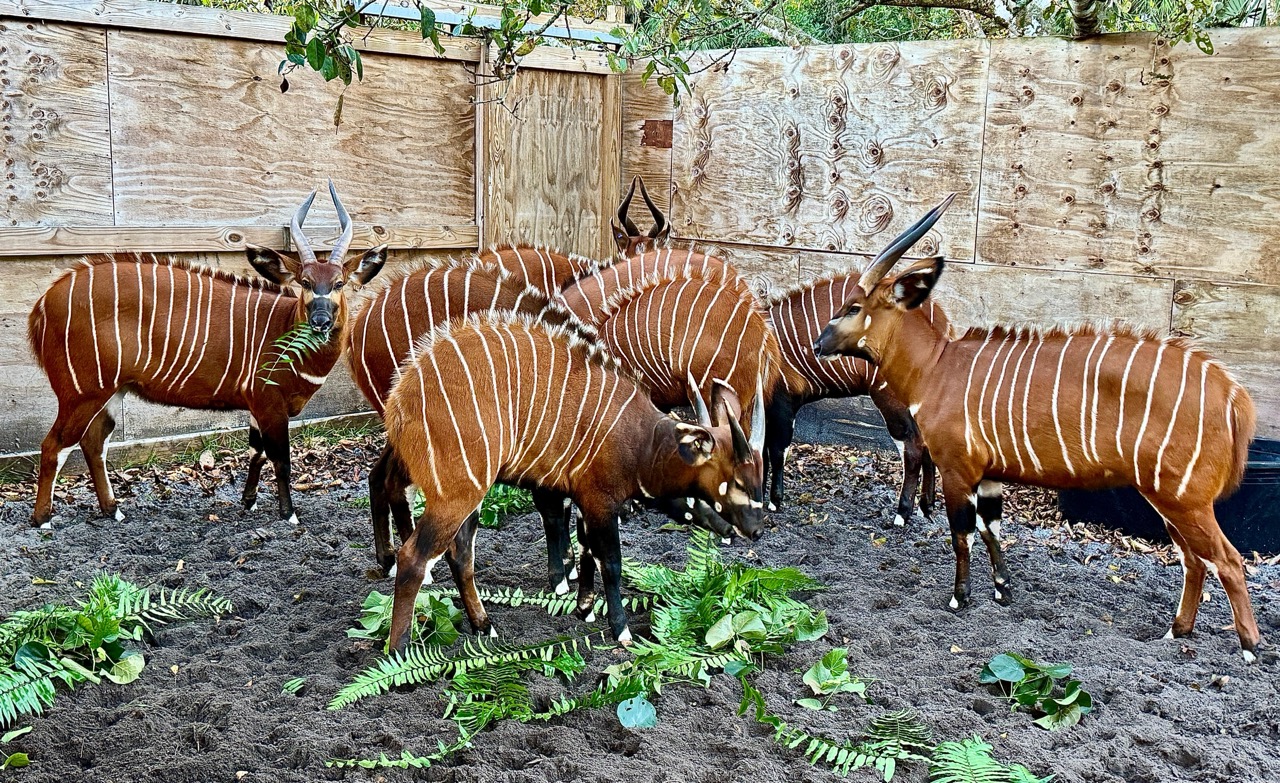
The 8 mountain bongo antelopes have been returned to Rare Species Conservatory Foundation.
“The unexpected cancelation has set this project back by a year,” Reillo said. “On top, we now have to make space for these eight animals who are supposed to be in Kenya.”
In spite of the setbacks, Reillo and his team remain focused on the longterm strategy to repatriate mountain bongo antelopes to Kenya.
“In the end, we averted a catastrophe and we’re so grateful to everyone who stepped up to help,” he said. “Repatriating wildlife is not for the faint-of-heart. It’s incredibly complex and difficult. And ultimately, saving critical species while we can is the highest calling for all of us.”