
FIU experts are available to discuss El Niño and its environmental and community impacts across South Florida and beyond. Experts can provide insight across a variety of areas including hurricane activity, rainfall and flooding, water quality, fisheries and mosquito activity.
Members of FIU's communications teams are available to assist members of the media in contacting experts:
College of Arts, Sciences & Education- JoAnn Adkins, 305-348-0398, jadkins@fiu.edu
- Christine Fernandez, 305-348-9987, chcalvo@fiu.edu
- Michelle Arean, 305-348-4492, marean@fiu.edu
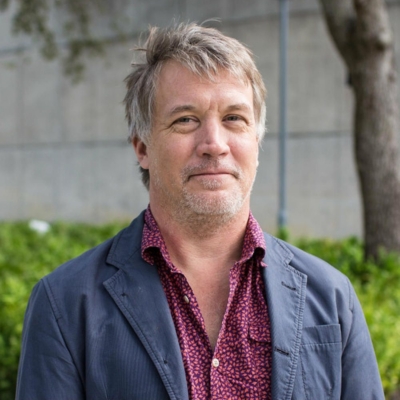
John Berry
Associate Professor
College of Arts, Sciences & Education
Berry can speak to how events like El Niño influence harmful algal blooms and the production of toxins in marine and freshwater systems, and what that means for ecosystem, wildlife and human health. Berry leads research on chemistry and toxicology of bioactive compounds produced by algae and microbes, including those responsible for Florida red tide. His work focuses on identifying and characterizing these toxins and understanding their impacts on environmental and public health.
For help, contact:
Christine Fernandez
305-348-9987
chcalvo@fiu.edu
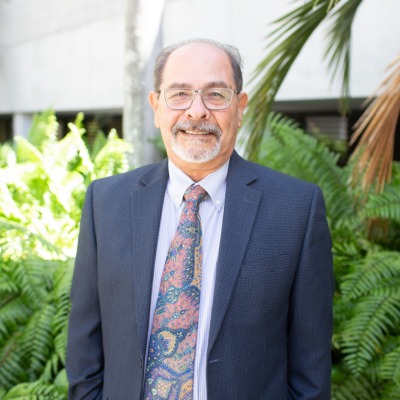
Henry Briceño
Research Professor
Institute of Environment
College of Arts, Sciences & Education
Briceño can speak to how climate patterns like El Niño and hurricane activity impact water quality in coastal and estuarine systems. For over 20 years, Briceño has been leading water quality monitoring efforts at FIU. He focuses on how our changing climate is impacting our waterways and the impacts that people and nature have on our ecological systems. Briceño leads the institute’s Water Quality Monitoring Network. Briceño is available for interviews in English and Spanish.
For help, contact:
Christine Fernandez
305-348-9987
chcalvo@fiu.edu
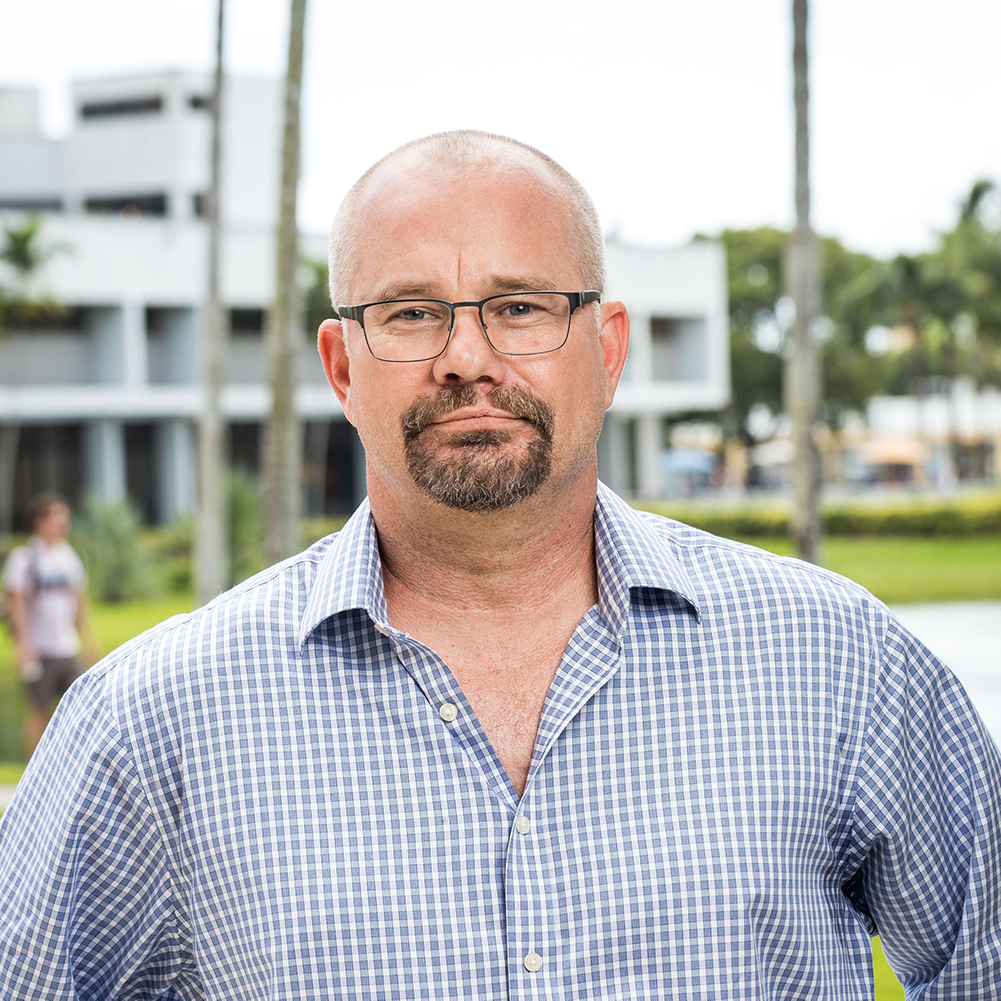
Robert Burgman
Associate Professor
College of Arts, Sciences & Education
For help, contact:
JoAnn Adkins
305-348-0398
jadkins@fiu.edu
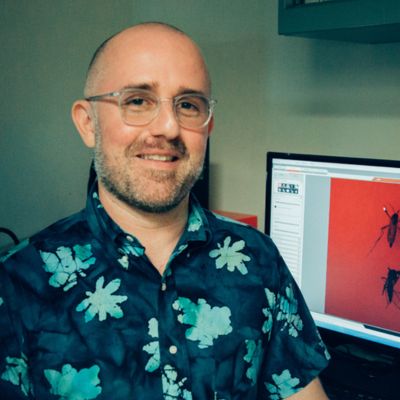
Matthew DeGennaro
Director, Biomolecular Sciences Institute
Associate Professor
College of Arts, Sciences & Education
DeGennaro can speak to how climate patterns like El Niño may influence mosquito populations and behavior, and what that could mean for the spread of mosquito-borne diseases. A neurogeneticist, DeGennaro leads research on how mosquitos detect and track humans using smell and other sensory cues, and how those behaviors can be disrupted to prevent disease transmission.
For help, contact:
Christine Fernandez
305-348-9987
chcalvo@fiu.edu
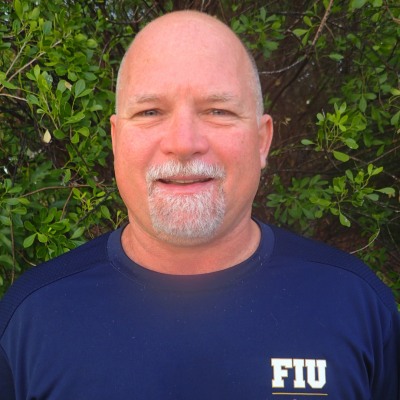
Tom Frankovich
Research Associate Professor
Institute of Environment
College of Arts, Sciences & Education
Dr. Frankovich is a broadly trained environmental scientist/ecologist who studies microalgal communities, how they are distributed across the globe, how they change through time, and how they are affected by the changing environment. He conducts field sampling from the freshwater Everglades and into the coastal oceans, and even from the backs of whales and sea turtles. He is a first responder to marine animal mortality events and when algae blooms occur and has identified the causal organisms. He is also on the editorial boards of algae research journals.
For help, contact:
Michelle Arean
305-348-4492
marean@fiu.edu
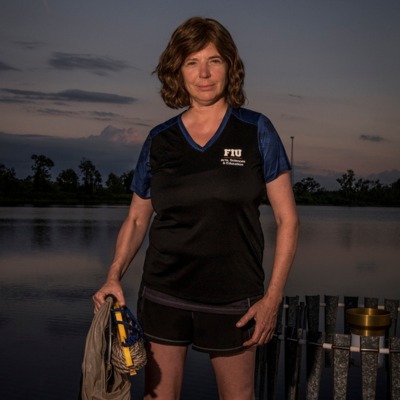
Evelyn Gaiser
Endowed George Barley Eminent Scholars Chair, Distinguished Professor
Institute of Environment
College of Arts, Sciences & Education
Gaiser can speak to how events like El Niño influence freshwater ecosystems, including water quality, nutrient cycling and frequency of algal blooms in South Florida wetlands. She is an aquatic ecologist whose work focuses on how environmental change and water management shape ecosystem health, particularly in the Everglades. Her research uses algae and other biological indicators to track the effects of climate variability, sea level rise and human activity on wetland systems over time. Her research helps inform Everglades restoration and broader efforts to understand how variations in weather and hydrology affect ecosystem function.
For help, contact:
Christine Fernandez
305-348-9987
chcalvo@fiu.edu
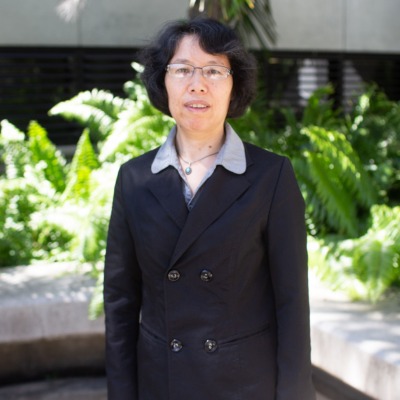
Haiyan Jiang
Professor
College of Arts, Sciences & Education
Jiang can speak to how El Niño and related weather patterns influence hurricane behavior, including storm intensity, rainfall and rapid intensification. Jiang is a meteorologist with research interests in hurricane intensity, intensity change and structures of inner-core convection and precipitation. Jiang’s expertise is in satellite remote sensing techniques that can detect various characteristics of weather systems. She successfully applied these technologies to study hurricane rainfall, convection, winds, and warm-core structures. A coherent theme of her research is to advance our understanding of hurricane intensity and intensity change. She developed long-term satellite-based tropical cyclone databases and used these tools to study the climatology of hurricanes and to develop algorithms for estimating current intensity and predicting rapid intensification of tropical cyclones. Her research on hurricane intensity estimation, rapid intensification prediction, and climatology of hurricane inner-core structures has been funded by federal agencies including NSF, NOAA and NASA.
For help, contact:
Christine Fernandez
305-348-9987
chcalvo@fiu.edu
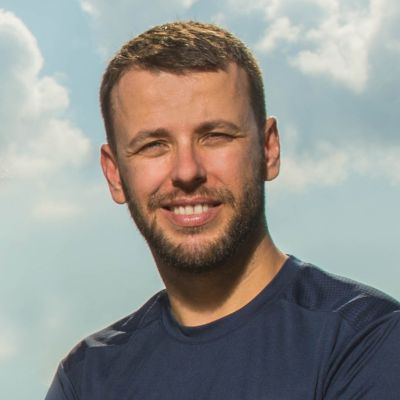
Jeremy Kiszka
Associate Professor
College of Arts, Sciences & Education
Kiszka is one of the world’s leading marine mammal scientists and has published over 180 research articles and book chapters. Over the past 25 years, he has investigated the ecology, behavior, and conservation of whales, dolphins, manatees, and otters across the globe, including the Indian Ocean, European waters, the Arctic, and North America. He works on some of the most iconic marine mammal species, from manatees in Florida to killer whales (or orcas) in the Arctic. His research focuses on the effects of changing ocean conditions on marine mammals, or on the roles and importance of these animals in marine ecosystems. Kiszka has studied over 60 species of marine mammals across 30 countries and currently serves on international scientific committees, including those of the International Whaling Commission and the International Union for Conservation of Nature. Originally from France, he earned his PhD in Oceanography from the University of La Rochelle. He spent six years living in East Africa conducting research on dolphins and whales before joining Florida International University nearly 14 years ago. Kiszka is also the President of the Society for Marine Mammalogy, the largest professional society dedicated to marine mammal science.
For help, contact:
Michelle Arean
305-348-4492
marean@fiu.edu
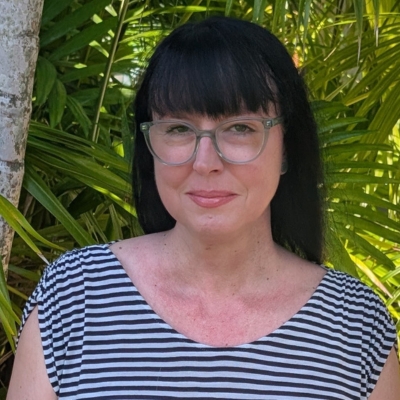
Schonna Manning
Assistant Professor
Director of Water-Omics, Institute of Environment
College of Arts, Sciences & Education
Manning investigates the dynamics of harmful algae working at the intersection of molecular biology and analytical chemistry. Her research focuses on understanding why microalgae, including cyanobacteria, form blooms and proliferations often accompanied by potent neurotoxins. She uses comprehensive omics techniques, including environmental DNA analysis coupled with whole-genome sequencing, transcriptomics, proteomics, and metabolomics. Manning is the director of Water-Omics for FIU's Institute of Environment, and she has several monitoring projects in Biscayne Bay (NOAA), Wakulla Springs (Florida State), the Everglades (CERP-S), and central Texas (LCRA, City of Austin). She is currently the past-president of the Phycological Society of America (president 2025), has published over 55 articles, and serves on the editorial boards for the Journal of Phycology and Toxins.
For help, contact:
Christine Fernandez
305-348-9987
chcalvo@fiu.edu
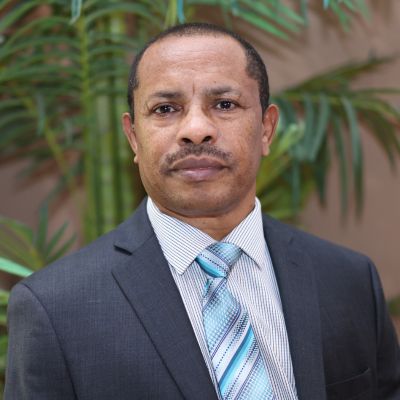
Assefa M. Melesse
Professor
Department of Earth and Environment
Institute of Environment
College of Arts, Sciences & Education
Assefa M. Melesse is recognized internationally for his pioneering research on hydrology, water resources, and climate-driven hydrologic extremes across Africa and the Americas. He currently conducts research to unravel the complex dynamics of river systems from the Nile Basin in East Africa to the Everglades and Florida Bay in South Florida. His work on El Niño-driven hydrologic extremes including large-scale droughts and catastrophic floods has advanced scientific understanding of how climate variability shapes water availability and disaster risk across vulnerable regions. His research on the Nile Basin stands as one of the most comprehensive hydro-climatic studies of that transboundary system in the world, informing water-sharing policy discussions among riparian nations and contributing to cooperative water governance frameworks. He also served in high-level science-policy roles, including as a Jefferson Science Fellow at the National Academies and Senior Climate and Environment Fellow, U.S. Department of State and where his expertise was directly relevant to the international water diplomacy and climate resilience strategies. A distinguished University Professor at Florida International University, he has secured competitive research funding and authored more than 360 peer-reviewed publications.
For help, contact:
Michelle Arean
305-348-4492
marean@fiu.edu
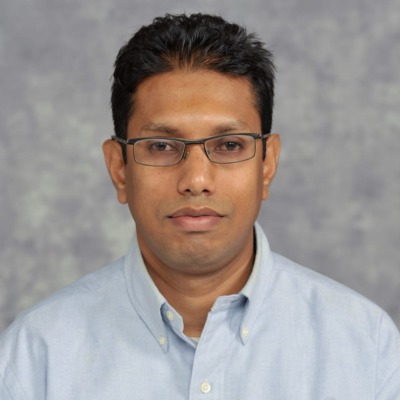
Pallab Mozumder
Professor
Institute of Environment
College of Arts, Sciences & Education
Mozumder can speak to how climate patterns like El Niño influence hurricane risk, evacuation behavior and disaster impacts. Mozumder is an environmental economist with expertise in socio-economic aspects of natural hazards. His research on hurricane risk mitigation and evacuation behavior has been funded by federal and state agencies such as the National Science Foundation, National Oceanic and Atmospheric Administration, Florida Department of Community Affairs and Florida Sea Grant.
For help, contact:
Christine Fernandez
305-348-9987
chcalvo@fiu.edu
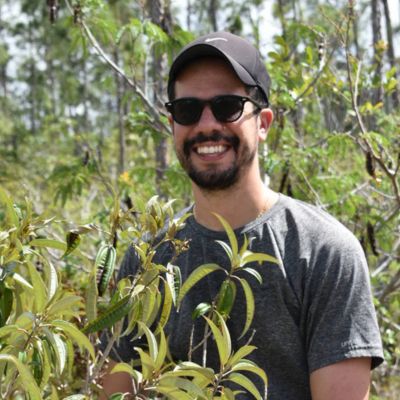
Andre Naranjo
Research Assistant Professor
Curator of the Wertheim Conservatory
College of Arts, Sciences & Education
Naranjo's research focuses on the phylogenetics, biogeography, and conservation of plants in the North American Coastal Plain and Caribbean biodiversity hotspots. His work integrates evolutionary biology, ecological modeling, and botanical collections to better understand the origins and preservation of tropical and subtropical plant diversity. He is also dedicated to science outreach and mentorship, engaging primary, secondary, and undergraduate students to increase awareness of endangered ecosystems and species throughout South Florida and the broader Caribbean region.
For help, contact:
Michelle Arean
305-348-4492
marean@fiu.edu
Jayanatha Obeysekera
Director, Sea Levels Solutions
Research Professor
Institute of Environment
College of Arts, Sciences & Education
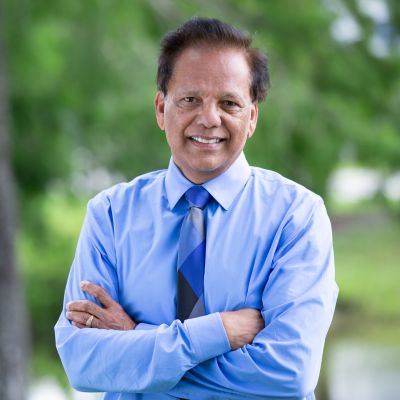
Obeysekera can speak to how El Niño influences hurricane activity, rainfall patterns, flooding risk and water management. He previously served as chief modeler at the South Florida Water Management District, where he had a leading role in modeling of the Everglades and Kissimmee River and Everglades restoration projects. He was co-author of the sea level rise projections report published by NOAA for the National Climate Assessment. He also co-authored a report on regional sea level projections for Department of Defense facilities across the globe. He has extensive media experience, including print and broadcast.
For help, contact:
Christine Fernandez
305-348-9987
chcalvo@fiu.edu
Jennifer Rehage
Professor
College of Arts, Sciences & Education
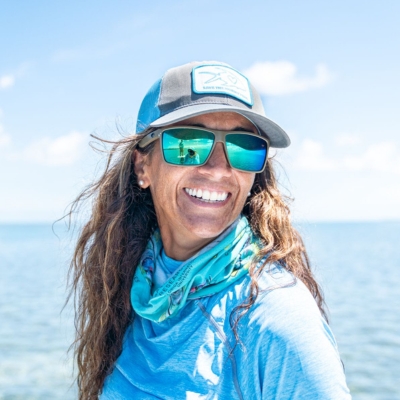
Jennifer Rehage is a coastal ecologist whose research focuses on fish, fisheries and disturbance ecology and incorporates human dimensions. Her work integrates fish behavior, movement, trophic ecology, ecotoxicology, and local ecological knowledge to examine how hydroclimatic stressors and human activities influence coastal fisheries, with a particular emphasis on Florida’s recreational fisheries. Using interdisciplinary and solutions‑oriented approaches, Rehage collaborates closely with fishers to coproduce knowledge that informs management, conservation, and restoration. Recent work focuses on the presence of pharmaceuticals in recreational fisheries and the implications for wastewater management, the health of Floridians and Florida’s valuable estuaries. Rehage has published over 100 peer‑reviewed articles, her research has been widely featured in national and international media and has contributed directly to policy and management actions related to water quality and fisheries conservation.
For help, contact:
Michelle Arean
305-348-4492
marean@fiu.edu
Erik Salna
Meteorologist and Associate Director for Education and Outreach
Extreme Events Institute (EEI) & International Hurricane Research Center (IHRC)
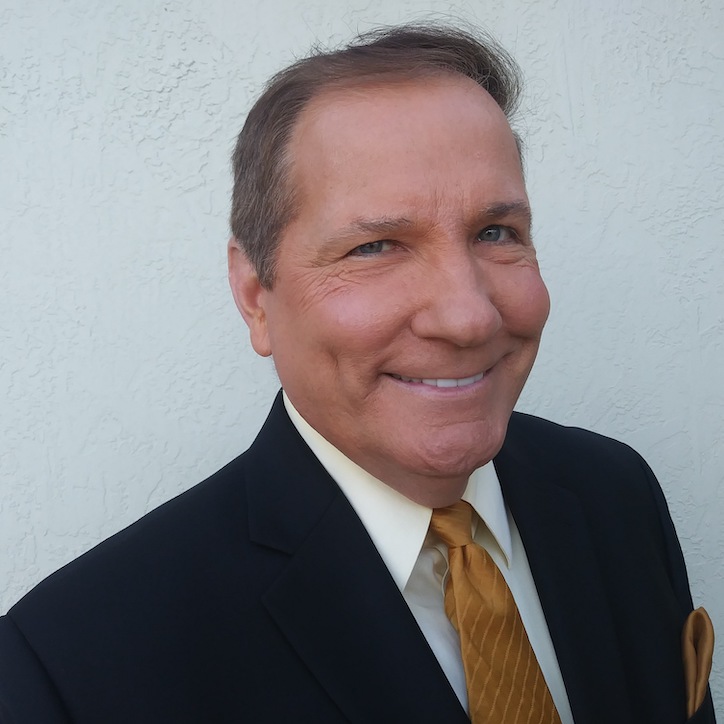
Salna works with the Wall of Wind research team and coordinates education and outreach activities. He has experience as a broadcast meteorologist and within both non-profit and for-profit environments in meteorology, mitigation, preparedness, education, media and EOC activations. Before EEI & IHRC, he worked at America’s Emergency Network, which focused on live video streaming technology. He also served as project coordinator for the non-profit Hurricane Warning at the Disaster Survival House, located in Deerfield Beach. He also served as hazard mitigation manager for the City of Deerfield Beach, was on the city’s crisis activation team and participated in all activations of the emergency operations center.
For help, contact:
JoAnn Adkins
305-348-0398
jadkins@fiu.edu
Tiffany Troxler
Associate Professor, Department of Earth and Environment
Director of Science, Sea Level Solutions Center, Institute of Environment
College of Arts, Sciences & Education
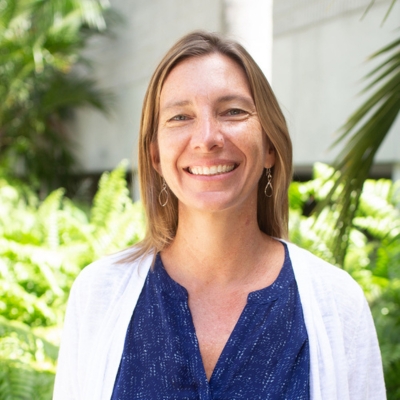
Tiffany Troxleer is an ecosystem ecologist and sustainability scientist whose work cuts across science, policy and management of natural and urban environments. She and her students examine how Everglades ecosystems respond to sea-level rise and water management and develop new research and tools to enhance their resilience to climate change. Her research group also advances interdisciplinary collaborative research that supports local to regional strategies and actions for climate change mitigation and adaptation. She has also served as a Program Officer with the Intergovernmental Panel on Climate Change (IPCC) Task Force on National Greenhouse Gas Inventories based in Japan supporting the implementation of nature-based carbon mitigation in national and international policy frameworks. She currently serves as Chair of the International Long-Term Ecological Research Network.
For help, contact:
Michelle Arean
305-348-4492
marean@fiu.edu
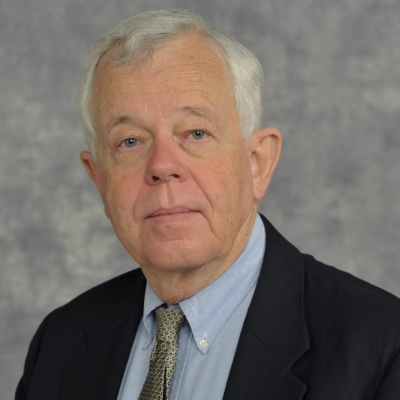
Hugh Willoughby
Distinguished Research Professor, Retired
Institute of Environment
College of Arts, Sciences & Education
Willoughby can speak to how El Niño and related atmospheric patterns influence tropical cyclone structure, intensity and impacts. He has flown more than 400 missions into the eyes of hurricanes and typhoons as a meteorologist for the federal government. Willoughby was a Research Meteorologist at the Hurricane Research Division of NOAA’s Atlantic Oceanographic and Meteorological Laboratory, where he worked since 1975 and served as director from 1995 until 2002. Willoughby also served on the Florida Commission on Hurricane Loss Projection Methodology and has extensive knowledge of hurricane impacts and insurance.
For help, contact:
Michelle Arean
305-348-4492
marean@fiu.edu
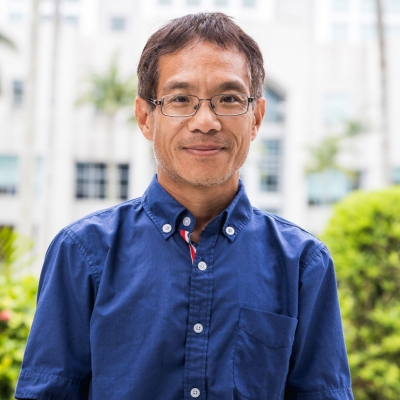
Ping Zhu
Professor
College of Arts, Sciences & Education
Zhu can speak to how El Niño influences hurricane activity and storm development. Zhu is a meteorologist whose research interests are in hurricanes, atmospheric convection, boundary layer, and numerical modeling. Using innovative numerical and observational methods, he characterizes the turbulence structure and quantifies turbulent transport in the hurricane boundary layer critical to the storm evolution. His research funded by NSF and NOAA addresses key issues on the representation of sub-grid-scale physical processes in numerical models and the improvement of forecasting skill by NOAA's operational models used for predicting hurricanes.
For help, contact:
Christine Fernandez
305-348-9987
chcalvo@fiu.edu