

Newly graduated doctor leaves FIU having transformed medical 3D printing lab
What began as a handful of borrowed machines tucked inside a professor’s office has grown into a cutting-edge medical resource at the FIU Herbert Wertheim College of Medicine, thanks in large part to the vision, technical expertise and generosity of a now-recent graduate.
Craig Warlen M.D. ’26 was introduced to the anatomy lab through a research project overseen by Dr. Tracy Cassagnol, who leads the 3D lab in the college’s anatomy suite. The approach is increasingly common in medical school as 3D printing is integrated into anatomy labs to provide hands-on, tactile learning experiences that complement traditional cadaveric dissection and digital imaging.
“It really started with a few barebones parts,” Cassagnol said. “We had one solid printer, but much of what we needed, I was purchasing out of pocket. I realized we needed more versatile and faster printers.”
Warlen - who became Dr. Warlen when he graduated on April 30 - brought to his studies a strong background in biomechanics as he held an undergraduate degree in mechanical engineering and a master's in biomedical/medical engineering. He quickly saw the potential for the lab to have a broader impact on medical education and clinical training.
Early in his time at the medical school, Warlen began to play a hands-on role in shaping the lab’s work. He contributed to one of its first projects: developing 3D-printed bone models designed for surgical drilling practice. Drawing on his biomechanics background, he helped the team think critically about material selection and structural design to ensure the models could better replicate the mechanical properties of real bone.
“I always knew that at some point my engineering background would help me find ways to bring these two worlds together,” Warlen said. “Seeing that happen through the 3D printing lab has been incredibly rewarding.”
Working closely with Cassagnol, Warlen also helped develop a detailed 3D model of the pulmonary bronchial tree. This model was used as a teaching tool for second-year medical students, highlighting the lab’s ability to translate complex anatomical relationships into tangible, interactive learning tools.
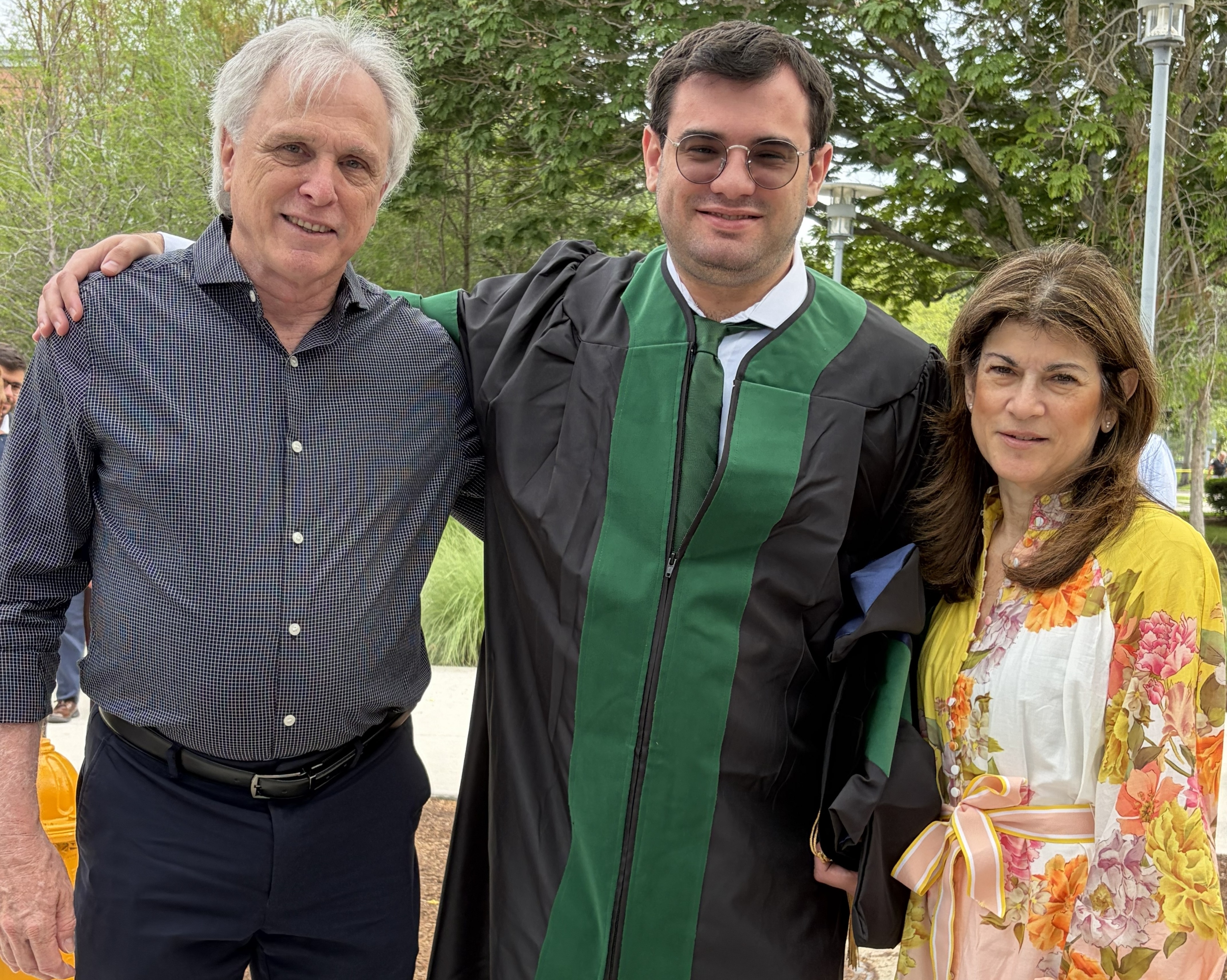
Motivated to help further expand the lab’s capabilities, Warlen turned to his parents, who oversee the A-Z Foundation, a charitable organization that supports nonprofit initiatives. After learning about the lab’s needs, the foundation donated $100,000, with $25,000 allocated toward student scholarships and the remainder supporting the purchase of new, faster, and more advanced 3D printing equipment.
“We realized the lab needed more diverse, higher-quality printers,” Warlen said. “Printers with specialized resins that could better replicate the feel of real tissue.”
“The impact of the Warlens' generosity through the A-Z Foundation is truly inspirational,” said Naomi Nixon, associate dean for development.“We are incredibly grateful to have parents step up to help elevate technology in the classroom at the Herbert Wertheim College of Medicine.”
The expanded lab is making a difference beyond campus. Physicians affiliated with FIU’s clinical partners, including Baptist Health and Nicklaus Children’s Hospital, are now using the lab to enhance training and patient care.
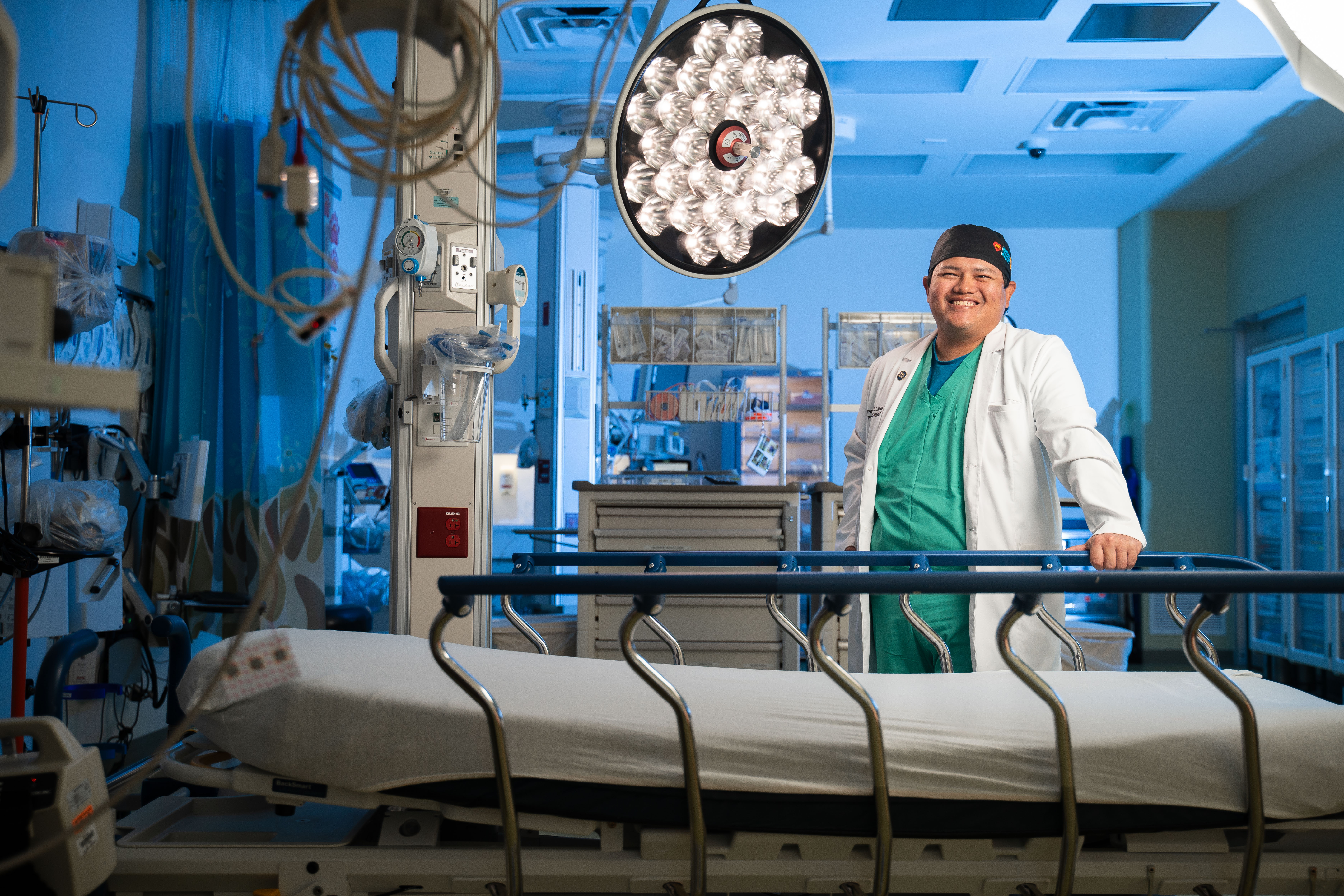
Dr. Patricio Lau ’09, M.D. ’13, a pediatric surgeon and medical director of trauma at Nicklaus Children’s Hospital, has collaborated with the lab to create realistic medical training models. One project involved developing a 3D-printed prosthetic leg of an infant to help medical teams practice placing intraosseous lines—a critical procedure used in neonatal emergencies to deliver fluids and medication into the bone marrow when intravenous access is difficult or impossible.
“The models allow doctors and emergency personnel to become comfortable performing these procedures before they’re in high-stress, real-life situations,” Lau said. “That confidence can make a real difference for patients.”
The prosthetics feature realistic bone structures and gel-filled tissue, layered to mimic muscle and skin, closely simulating what physicians encounter clinically. Future plans include developing a laparoscopic infant abdominal wall model designed for neonatal surgical training.
“3D printing technology has tremendous potential in medicine, and right now it’s still underutilized,” Lau said. “It offers innovative opportunities for education, simulation, and physician preparedness.”
Support from the A-Z Foundation has significantly transformed the lab. The new printers have increased production speed and enabled the creation of complex, anatomically accurate models that were previously impossible.
“We now have a substantial amount of supplies,” Cassagnol said. “Student participation has grown from five to about 30 students, and projects that used to take days can now be completed in a fraction of the time.”
The enhanced lab has also become a magnet for student engagement, offering hands-on opportunities to merge anatomy, technology, and innovation.
For Warlen, who now starts post-graduate training in internal medicine at Maine Medical Center in Portland, the project represents more than a donation. It reflects a personal commitment to advancing medical education and improving patient care, grounded in both technical expertise and collaborative leadership.
“My parents are incredibly proud,” he said. “And I’m excited to see how this technology continues to be used to better train physicians and ultimately provide excellent care to patients.”
As FIU’s 3D printing lab continues to evolve, it stands as a testament to what can be achieved when students, faculty, and supporters work together to advance medical education.