

FIU researcher to be featured on National Geographic’s new docuseries
FIU researcher, Matthew Shirley, will be showcased in National Geographic’s new seven-part natural history series, Africa: Earth's Wild Home and in the October issue of National Geographic magazine.
Filmed over four years, the docuseries features Shirley, a research assistant professor at FIU’s Global Forensic Science and Justice Center and a National Geographic Explorer, in the second episode titled, “Jungle.” The series explores one of the wildest continents, bringing viewers closer to its animals, landscapes, and the people protecting it. Shirley is among the National Geographic Explorers who are working to understand and protect Africa’s wildlife. His work includes research on dwarf crocodiles in Gabon, which will be highlighted in episode two.
The series premiers on October 2 at 8 p.m. EDT on National Geographic, with next-day streaming on Disney + and Hulu. The docuseries, presented by Rolex as part of the Perpetual Planet Initiative, is narrated by actress Wunmi Mosaku.
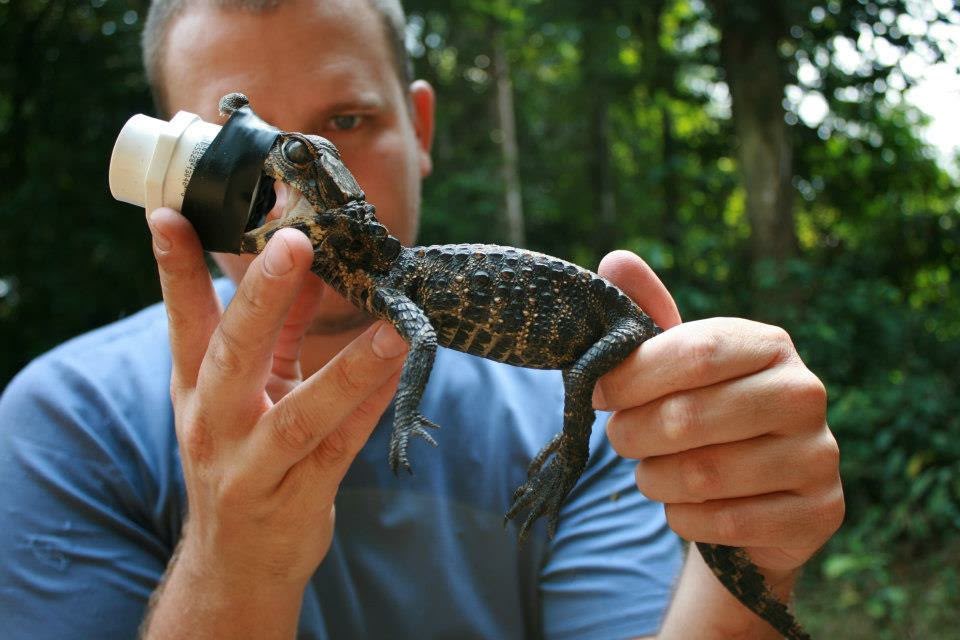
Alongside the television premier, Shirley’s research on dwarf crocodiles is highlighted in the October issue of National Geographic magazine as part of the Explorer’s Spotlight. The issue also features a piece on the conservation of pangolins — one of the world’s most trafficked wild mammals — where Shirley offers expert insight.
"National Geographic has had such a profound impact introducing people to the wonders of the world and the science that helps us understand it,” Shirley said. “It’s incredible to be recognized by such a historic media outlet.”
Shirley is the sole scientist actively researching the only known permanent cave-dwelling crocodile population in the world, which will be featured in the National Geographic docuseries. As part of his research on the dwarf crocodiles, he is changing how these animals are recognized. What they once believed to be one dwarf species, they have now discovered are in fact three distinct dwarf crocodile species. His research has revealed that despite the lack of light and living in an environment that is filled with severely corrosive bat-waste, these crocodiles were in much better physical conditions than their forest dwelling counterparts. Shirley is now continuing to research the cave adaptations of the dwarf crocodiles and how their lifestyle impacts their vision, morphology, and physiology.
He is also working on an initiative to ensure sustainable trade of the dwarf crocodiles, which is one of the most heavily traded and commercialized crocodile species in the world — often thought of as one of the top three most commercialized and consumed wild meat species in the Congo basin, some of which often reaches communities in Europe and the U.S. Tune in to episode two to learn more about this fascinating species.
In addition to his field research in West Africa, Shirley also serves as the co-chair of the International Union for Conservation of Nature’s (IUCN) Pangolin Specialist Group. His research on pangolins is supported by the Allen Family Philanthropies.