
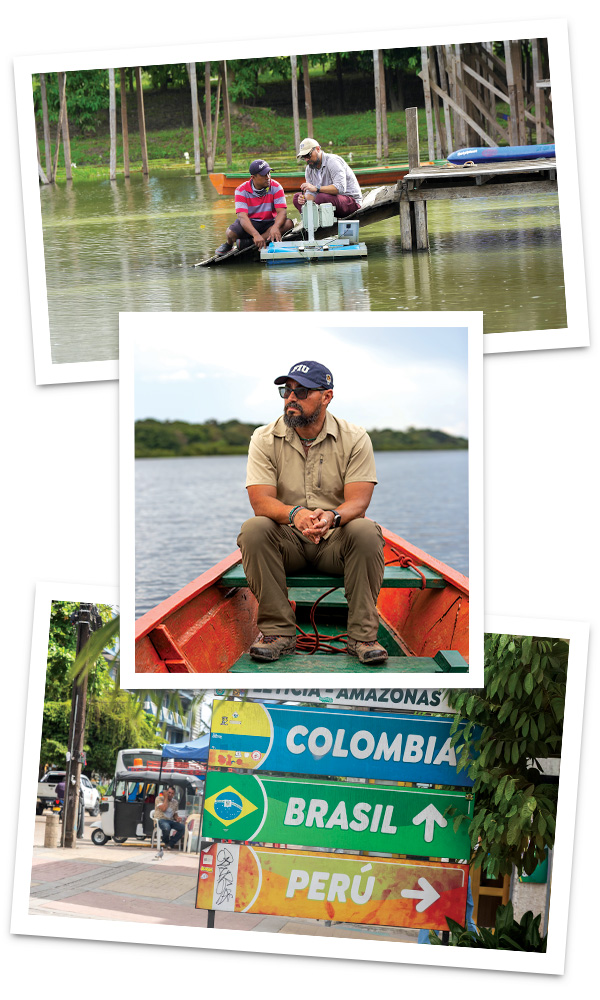
The Amazon River begins as capillaries of water trickling down the eastern slopes of the Andes. The waters flow, gathering sediments, nutrients and organic material, braiding into a vast hydrologic system that stretches over 4,000 miles across 40% of the South American continent – the equivalent of a river that stretched from Los Angeles to New York City and back again.
While the Amazon forest has benefited from significant gains in conservation, especially through increases in protected areas and the recognition of Indigenous land rights, the river has not been as fortunate. “Most freshwater systems, including the Amazon River itself, lack any formal protection or conservation status,” said Elizabeth Anderson, principal investigator of FIU’s Tropical Rivers Lab. Against this backdrop, scientists with FIU’s Institute of Environment are working collaboratively with communities that depend upon the river and other stakeholders to provide data to support and inform their decisionmaking and conservation advocacy.
In November 2025, FIU sent a team to document the efforts of the Amazon Riverscapes team, just one of many FIU research projects expanding knowledge and conservation of the Amazon region.
Tropical Rivers Lab: Amazon Riverscapes
The Amazon Riverscapes initiative emerged in early 2023 as an opportunity to build on strengths, assets and momentum of local freshwater stewardship in the triple border region of Colombia, Peru and Brazil along the Amazon River. Funded by the Gordon & Betty Moore Foundation, it focuses on an area that extends from Nauta, Peru, to Tefé, Brazil, which supports extraordinary biodiversity and Indigenous and local livelihoods.
Paulo Olivas, an assistant professor in the Department of Earth and Environment and researcher in the Institute of Environment, oversees the Colombian portion of the project. In Colombia, FIU’s Riverscapes initiative collaborates with local academic institutions (Universidad Nacional de Colombia), USA-based NGOs (Fieldkit. org), local NGOs and Indigenous communities. Together with FIU, these organizations form a network of conservation engaged in projects such as water quality and fish assessments and water level and local climate monitoring using open-source sensors and low-cost technologies.
“One of the major findings from the past three years is that we now know, empirically, how many communities are doing what, where and how in terms of freshwater conservation and management. Following that, we are working with them to co-produce data—not more colloquial information, or anecdotes—but scientific data, which can be helpful in advocating for freshwater conservation at local, national and international scales.” — Paulo Olivas
The Amazon Riverscapes team is an interdisciplinary collaboration spanning earth and environmental science and social science. It includes faculty and students with FIU’s Department of Earth and Environment, including Clinton Jenkins, associate professor; postdoctoral researchers Juliana Laufer and Fiorella Briceño; graduate researchers LuLu Victoria-Lacy, Tania Romero Bautista and Juan Sebastian Lozano; and research assistant Juan Cruz. The team also includes graduate researcher Stephannie Fernandes from the Department of Global and Sociocultural Studies, with field coordination led by Andrea Buitrago in Colombia and Marta Lujan and Nataniel Marin in Brazil.
Fundación Grupo PROA
Camila Pérez, director of Fundación Grupo PROA, works at the river’s edge supporting a broad array of community organizations engaged in sustainable biocultural practices.
While working with PROA, Olivas and Buitrago identified organizations managing portions of the Amazon River around Leticia, Colombia. FIU established ecological monitoring stations and co-produced geographical maps and seasonal calendars based on local and Indigenous knowledge and scientific data while documenting the specific conservation practices of these groups.
“Ecological monitoring allowed us to translate [Indigenous and local] knowledge into a language other actors understand, without losing its essence,” Pérez said.
TIKA
“Before, things were only spoken about, but now everything is recorded. That has helped a lot in defending the territory.” — Delfino Parente, president of TIKA
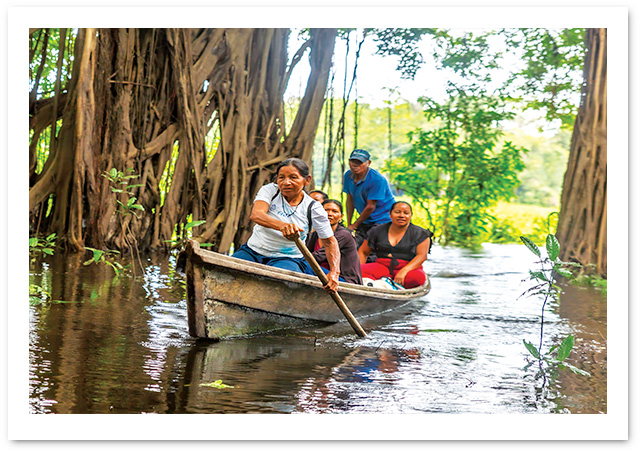
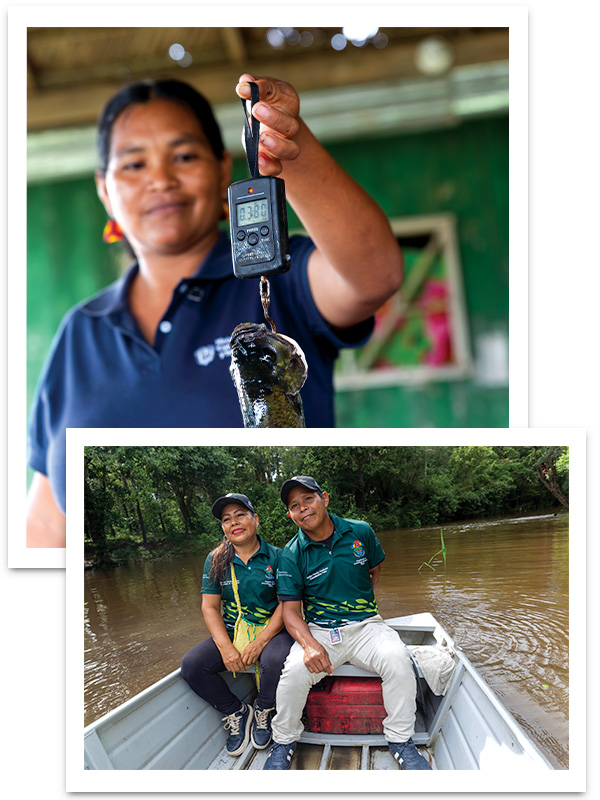
Asociación TIKA, comprised of members of seven Indigenous communities, was born from crisis. Fifteen years ago, in the Yahuarcaca lake system near Leticia, fish populations were collapsing, water levels were falling, and unregulated fishing was stripping the lakes of life. Antonio Docarmo, one of TIKA’s founders and a lifelong fisherman, recalls that before the fishing agreements, “We were going through many problems, first the use of poison, but also diminishing fish size, and high use of tiny nets. There were no fishing agreements. There was no control, there were no fish. You came to the lake and saw only water.” Today TIKA collectively protect its waters by establishing fishing agreements.
“Without FIU, we wouldn’t have as many materials or monitoring and training to move forward,” said Delfino Parente, TIKA’s president. In collaboration with PROA and FIU, TIKA has carried out monthly monitoring of fish and environmental conditions across roughly five square miles of the Yahuarcaca lakes. Together, they have created one of the region’s first continuous monitoring programs, recording over 5,500 individuals from 75 fish species and providing insight into the status of fish central to Indigenous livelihoods. These community fishing agreements are now being guided by scientific data generated in partnership with FIU researchers.
TIWA
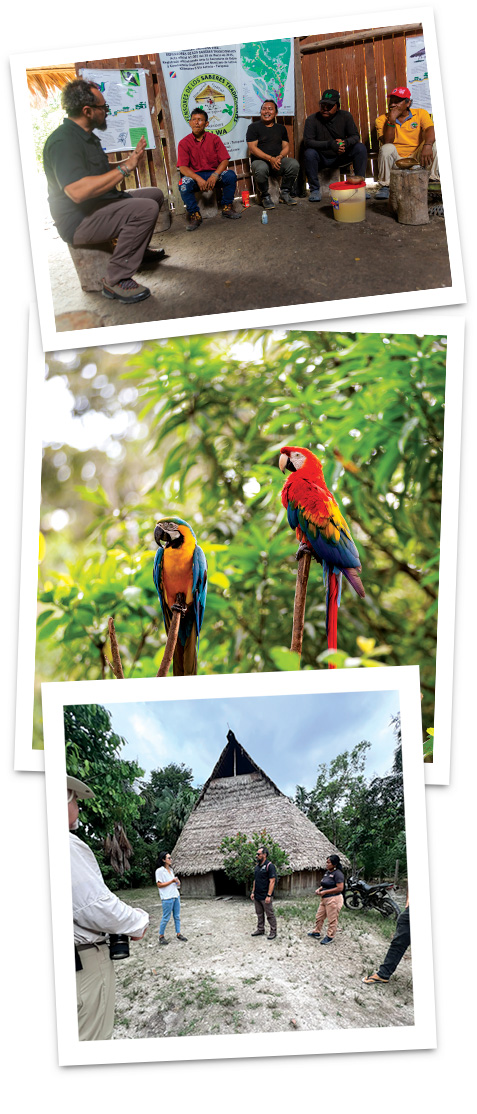
TIWA Elder “Boni” Bonifacio, a Murui leader, tells the story of TIWA from within a thatched maloca, the traditional meeting place of Indigenous peoples of the Amazon. Forced from ancestral territories by economic precarity and violence, many Indigenous families arrived in Leticia carrying little but their knowledge and cultural practices of life lived on the Amazon River. From that loss, TIWA was formed as a cabildo, or governing council, dedicated to defending and caring for traditional knowledge across Murui, Yucuna and Miraña peoples.
“The only thing we brought with us was our knowledge,” Boni said. “So, we organized with what we had.”
TIWA is a name formed from the three founding ethnic groups, with each word meaning “defender of cultural practices” in its respective language. Those practices take shape in initiatives such as Ijco, TIWA’s ecotourism project, which Luz Florez García, Murui, describes as a “nest,” where families share birding routes, lead craft workshops and have identified more than 165 bird species in recovering forest. “Birdsong keeps the universe alive,” said Jesús Negadeka, co-director of Ijco. Through efforts like these, TIWA carries out conservation of the lands and waters it manages while seeking state recognition of its rights to that territory.
Inside the maloca, community leaders display charts, graphs and maps that document birding routes and other key ecological data. These maps, which are based on FIU research that synthesizes Indigenous knowledge and environmental science, has enabled TIWA to develop more precise data about the wildlife and ecology of the lands they steward. By protecting and expanding this biocultural knowledge, TIWA, with the support of FIU, is creating a foundation that will sustain growing eco-tourism and allow future scientists to monitor conservation efforts and expand our knowledge of the Amazon River.
Curuinsi Huasi
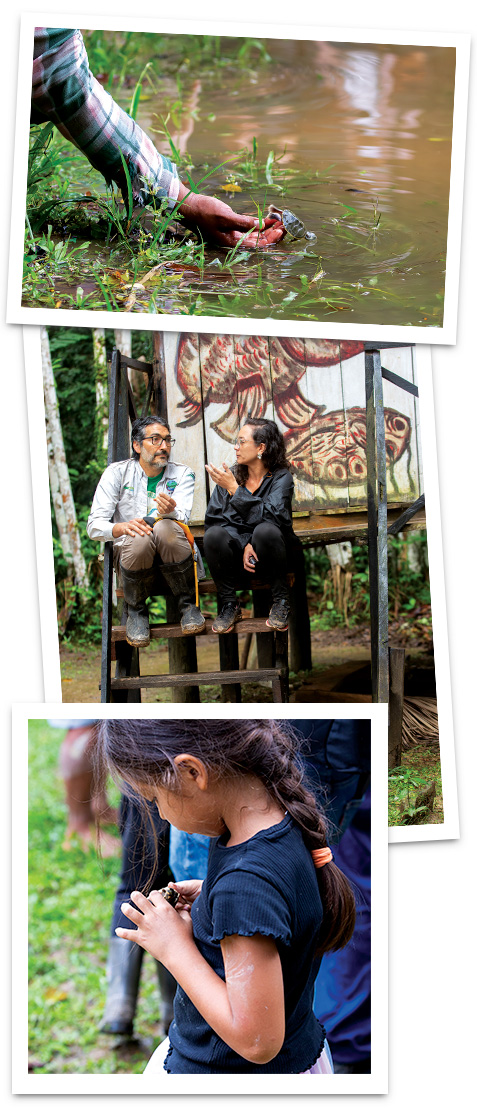
“Together with Peruvian communities that support the turtle conservation program, we are carrying out a symbolic release of turtle hatchlings. It’s about sharing the responsibilities of stewardship with children.” — Nabil, leader of Curuinsi Huasi
The visit of the Amazon Riverscapes team concluded in Santa Sofia, a community nestled in a bend off the river, as neighboring, regional and international communities gathered to help Curuinsi Huasi inaugurate the Baweta Center for Interpretation. Curuinsi Huasi is an Indigenous organization formed to conserve the local turtle population after elders began noticing serious declines in the species they traditionally hunted. The museum documents Curuinsi Huasi’s conservation efforts through exhibits of art, history and culture.
FIU’s ongoing contributions to the initiative include consolidating information, creating maps and producing data that assist Curuinsi Huasi in tracking, monitoring and measuring the effectiveness of their conservation efforts. Results of the collaboration are promising.
During the 2025 season, 67 nesting turtle mothers were carefully protected along with 58 nests, ensuring that roughly 1,500 hatchlings reached Amazon waters. These efforts were powered by 80 dedicated volunteers from four communities in Colombia and Peru and supported by FIU scientists, turning local stewardship into a cross-border commitment.
Back at Baweta, hatchlings—coin-sized with pliable shells and frantic silver claws—were passed carefully into hands of visitors. Students from a Peruvian riverside school laughed and tried to slip turtles into their pockets only to be reminded by the elders that these lives belonged to the river.
Here, a story that spans the Amazon basin, of Indigenous knowledge, local stewardship and international science, comes into focus through ritual. One by one, the turtle hatchlings were named and released by organizers, children, tourists and FIU scientists, symbolically marking a shift from local stewardship to international conservation—sustaining biodiversity and livelihoods through community-led science and ecotourism.