

FIU's Brave Bunch helps children overcome the anxiety that makes speaking feel impossible
Lucas has never struggled to find the words at home. Around his family, he's funny, playful and full of personality. But outside of home, especially around adults, anxiety often made speaking feel impossible.
This past summer, Lucas attended Brave Bunch, an intensive one-week treatment program at FIU's Center for Children and Families designed to help children with selective mutism gradually overcome that anxiety through real-world practice.
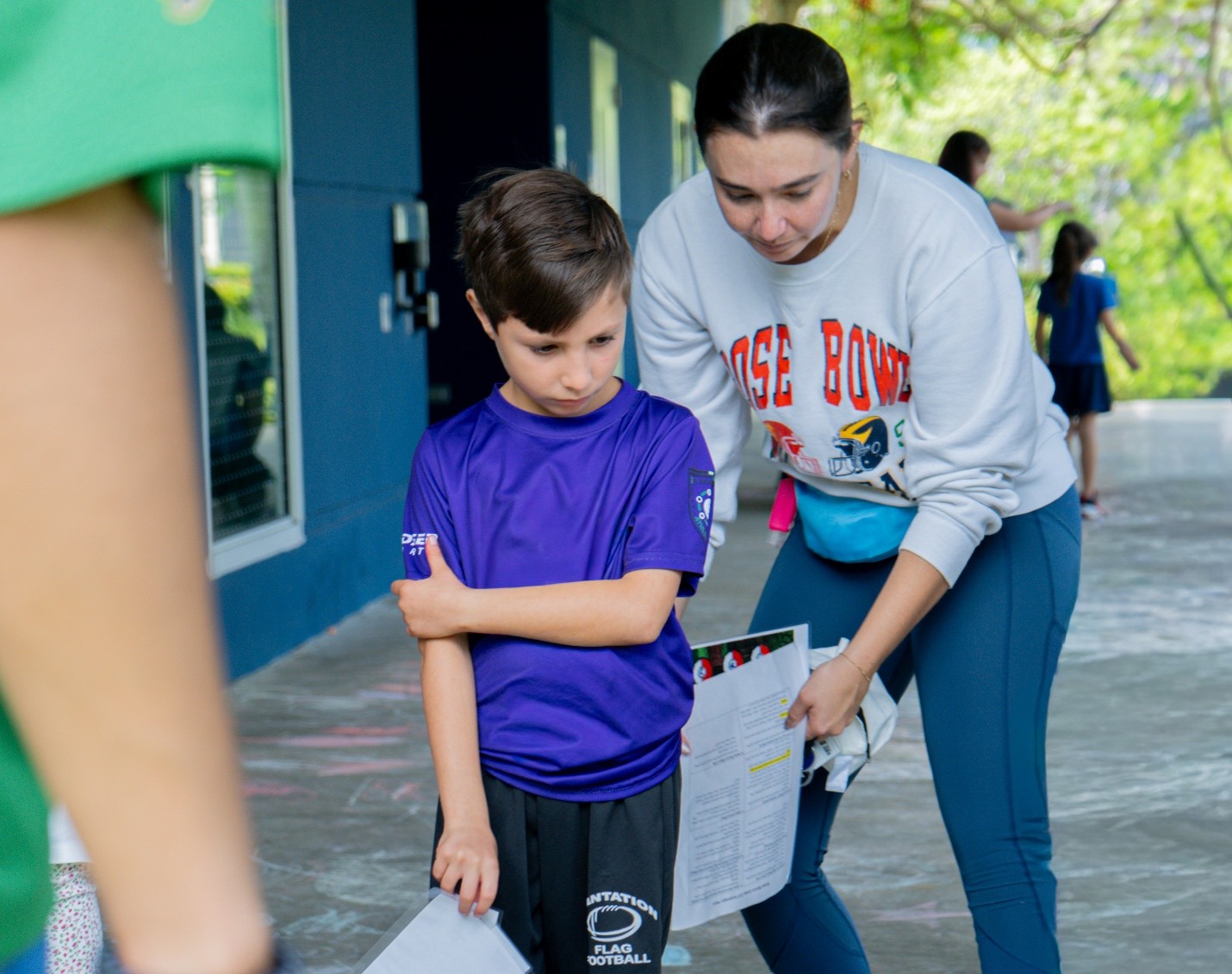
Brave Bunch counselor Rachael Rich encouraging Lucas to participate in the brave activity. (Photo by Brenda Ortiz/FIU's Center for Children and Families)
By the end of the week, his parents, Joey and Gisele, were already noticing a difference.
"He's more willing to do things on his own without prompting," they said. "Even silly things that show his personality."
For Lucas' family, those seemingly small moments represented something much bigger.
"The program has really helped us learn how to better support Lucas," they said. "It taught us not to rescue him in certain situations and instead encourage more verbal communication. It eased his anxiety, and ours too, especially in situations with friends or other adults who wanted to interact with him but didn't know how."
Selective mutism is often mistaken for shyness, but it's actually an anxiety disorder.
Children with selective mutism usually speak comfortably at home with family members but become unable to speak in other settings, such as school, around unfamiliar adults or sometimes even with peers. Most children begin showing symptoms before age 5, but because the condition is frequently misunderstood, many aren't diagnosed until they enter school.
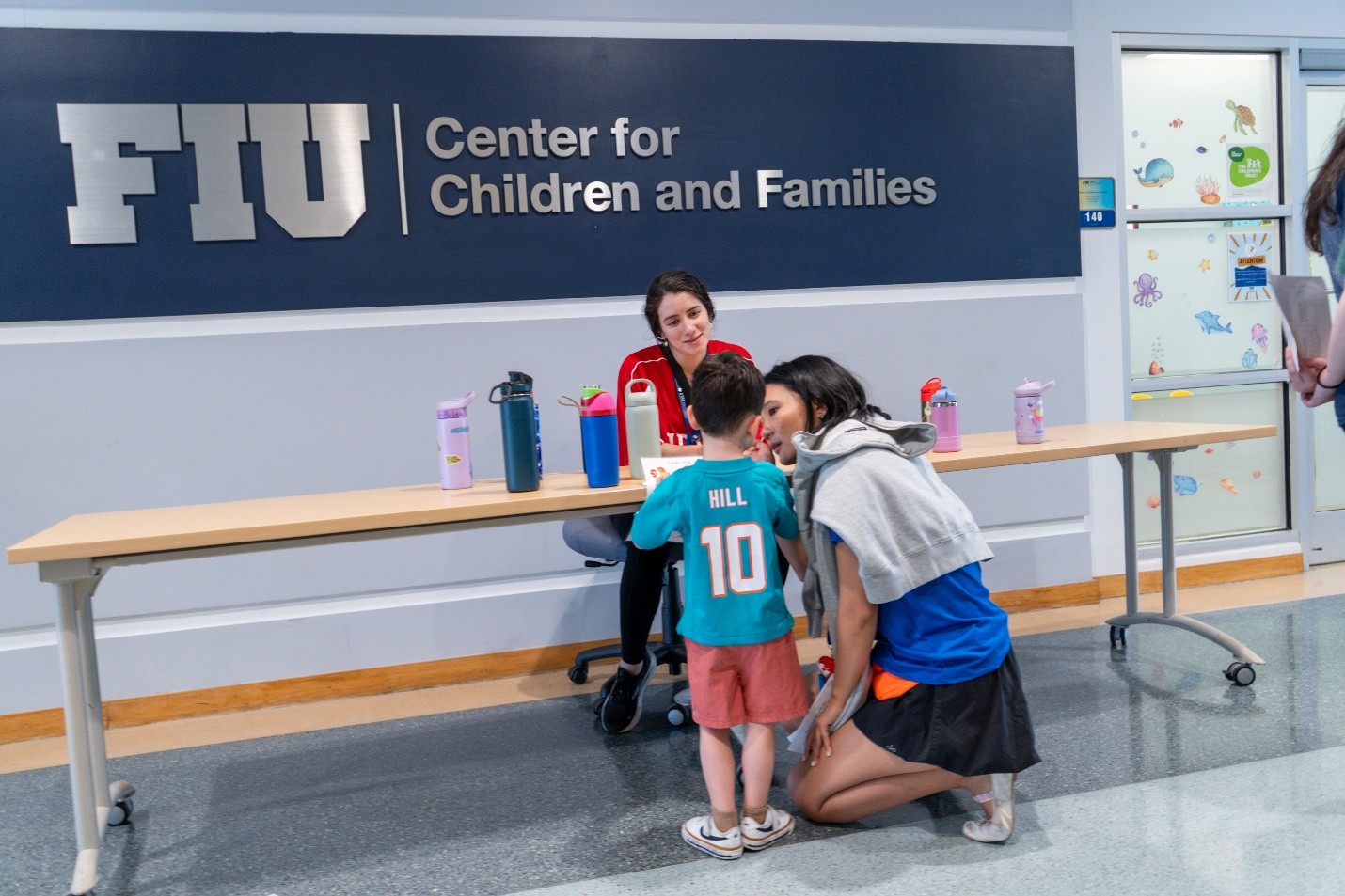
Brave Bunch counselors Debi Gonzalez and Shasha Zhu encouraging Nathan to use his brave voice. (Photo by Brenda Ortiz/FIU's Center for Children and Families)
"One of the biggest misconceptions is that these children are choosing not to speak," said Aileen Herrera, clinical director of Brave Bunch and the MINT Anxiety Clinic. "The reality is that they want to communicate, but anxiety makes speaking feel impossible."
Without treatment, that anxiety can affect friendships, learning, confidence and many of the experiences that shape childhood. Brave Bunch gives children a place to practice doing the very thing that feels so difficult: speaking.
Unlike traditional therapy that may take place once a week, Brave Bunch immerses children in several days of structured activities designed to help them practice speaking in real-life situations. Children build confidence through games, classroom activities, conversations with peers and community outings, all while receiving support from clinicians and counselors.
Parents are part of the treatment, too.
Throughout the week, they observe sessions, receive live coaching and practice the same strategies they'll use once they return home. They learn how to encourage "brave talking" during everyday situations like ordering food, asking a teacher a question or speaking with unfamiliar adults.
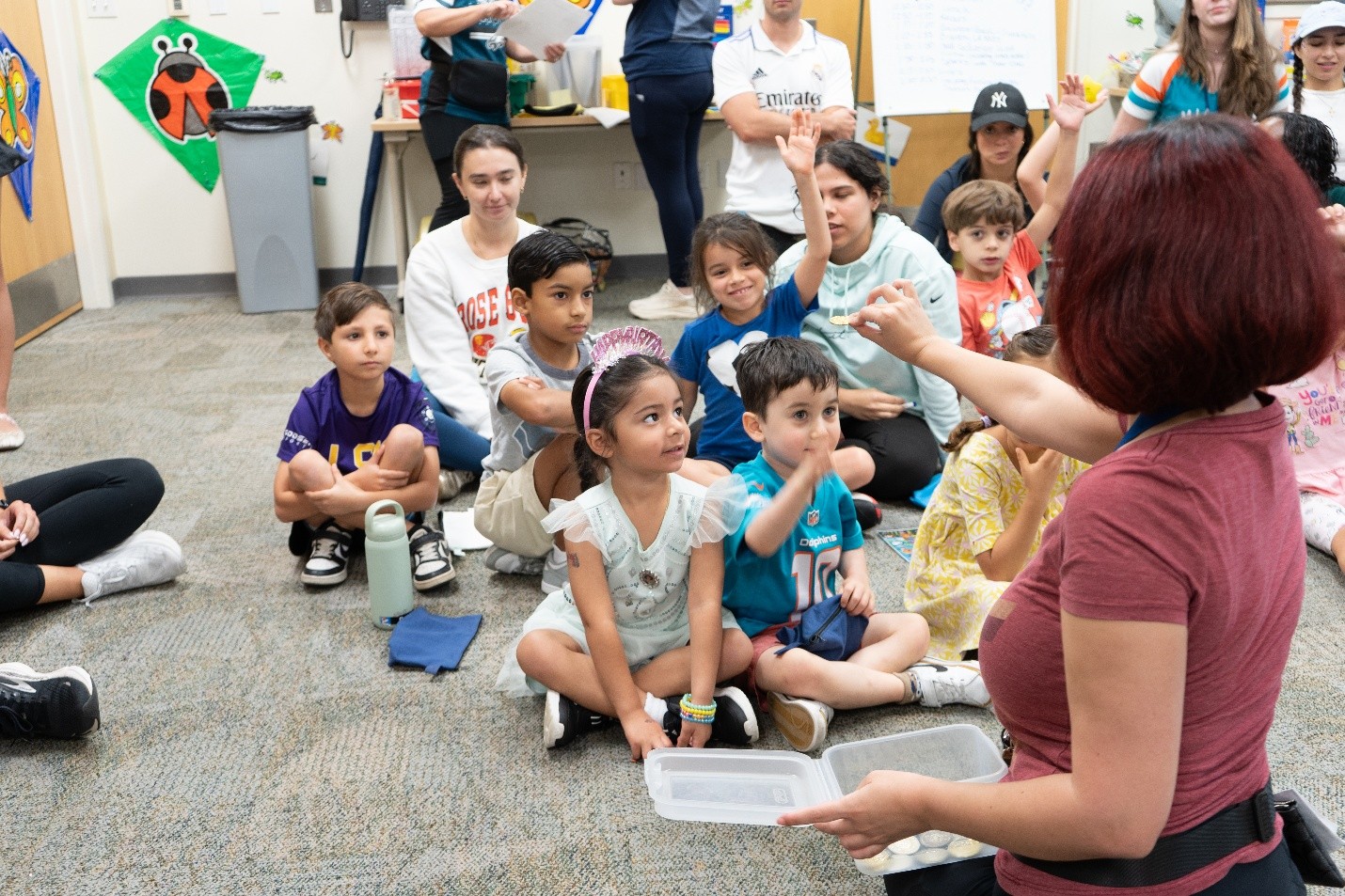
Aileen Herrera, clinical director of Brave Bunch encouraging the children to raise their hand during bravery lesson. (Photo by Brenda Ortiz/FIU's Center for Children and Families)
"Parents are essential members of the treatment team," said Jami Furr, senior psychologist at the MINT Anxiety Clinic and developer of Brave Bunch. "Children spend one week with us, but they spend the rest of the year with their families, at school and in their communities. When parents feel confident supporting their child's progress, children are much more likely to continue building on the gains they made during the week."
Since launching at FIU in 2014, Brave Bunch has helped approximately 257 children and their families.
Because selective mutism is still relatively misunderstood, programs like Brave Bunch are rare. It is one of only three intensive selective mutism treatment programs in the Southeast of the United States.
"Effective treatment requires specialized training and expertise," Herrera said. "Many families spend months or even years searching for the right help. Our hope is not only to help the children who attend Brave Bunch, but also to increase awareness so more children are identified early and connected with evidence-based treatment."
The program has also helped advance what researchers know about selective mutism.
In 2017, FIU researchers conducted the first National Institutes of Health-funded randomized controlled trial of an intensive group behavioral treatment for selective mutism. The study found that children who participated experienced significant reductions in symptoms, and those improvements continued long after treatment ended.
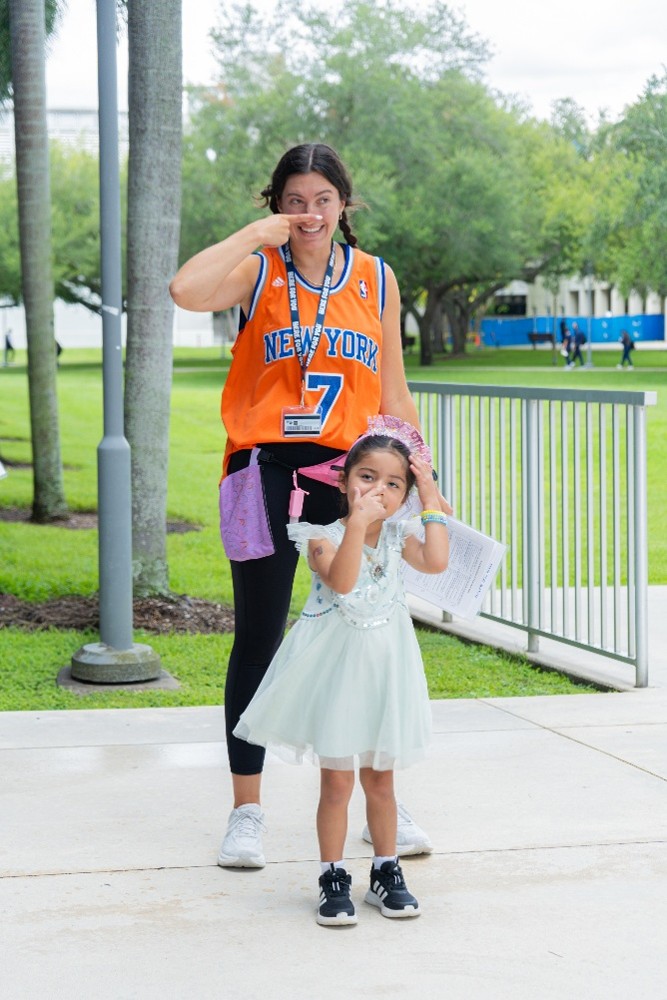
Brave Bunch counselor Maggie Modico encouraging Hailey to participate in the activity. (Photo by Brenda Ortiz/FIU's Center for Children and Families)
"Although we knew Brave Bunch was helping children clinically, this was the first study to demonstrate just how effective the program was," Furr said. "We've continued to build on that research, and we're seeing encouraging evidence that children who receive treatment earlier have better long-term outcomes."
For Ali, the first sign that Brave Bunch was making a difference for her daughter, Ryann, came just two days into camp.
"Her counselor described her as 'silly,'" Ali said. "That really stayed with me because it was the first time someone who had only recently met her had seen that side of her. It made me realize she already felt safe enough to let more of herself come through."
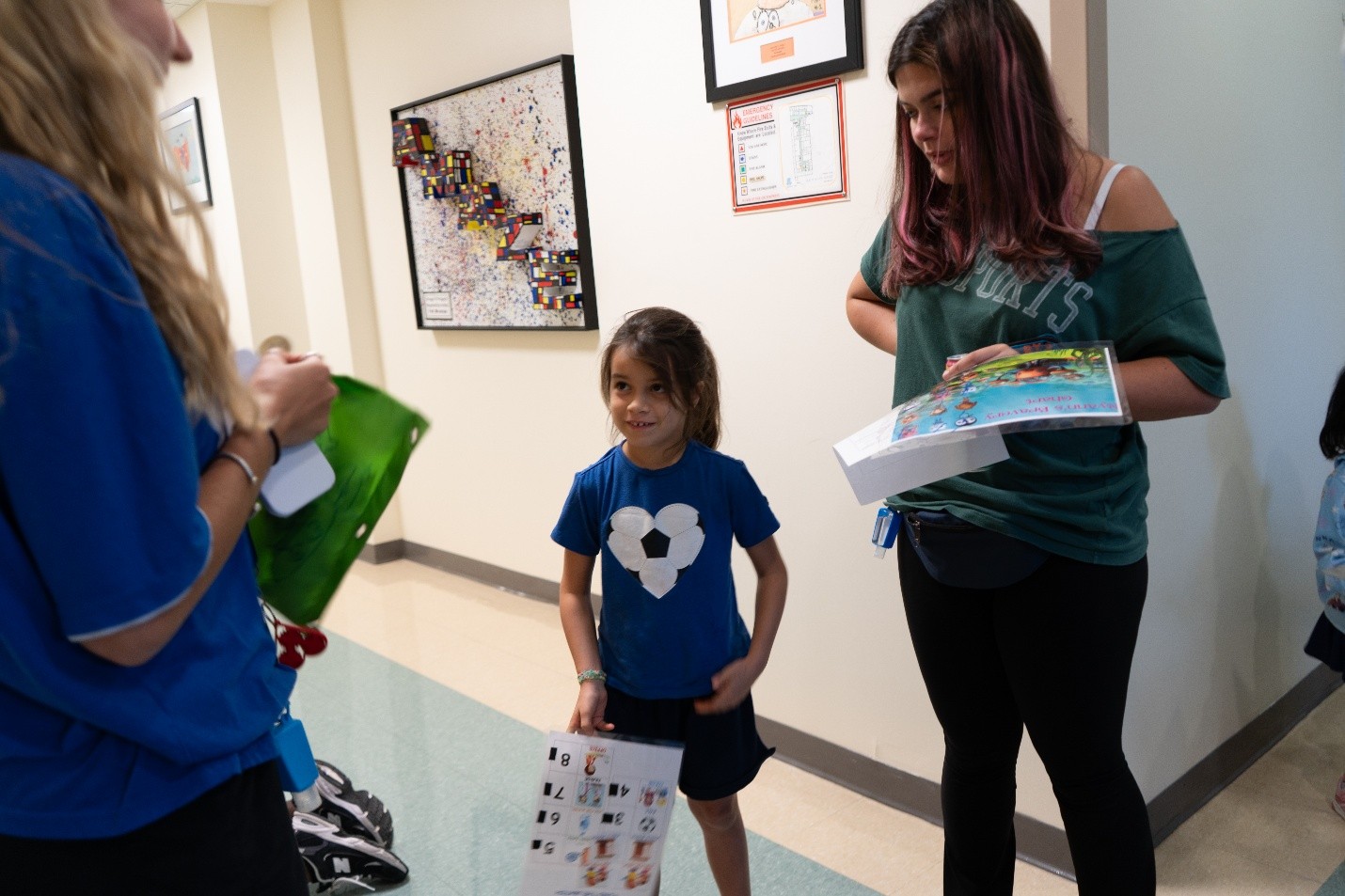
The changes didn't stop when camp ended.
Recently, while on vacation, Ali watched her daughter walk up to a hotel employee by herself and ask for a pool float.
"It may sound like a small interaction," she said. "But for her, it was a really brave step."
The program also changed the way Ali approached parenting.
"It helped us understand how to support her without speaking for her right away or putting too much pressure on her," she said. "We learned how to encourage more brave talking while giving her the space to do it one step at a time."
For Herrera, those everyday moments are what make the program so rewarding.
"The earlier children receive evidence-based treatment, the better their long-term outcomes tend to be," she said. "More than anything, we want families to know they aren't alone. Selective mutism is highly treatable, and we want every child to leave believing, 'I can do hard things.'"
For most children, speaking is something they rarely think about. But for children like Lucas and hundreds of others who have found their voice through Brave Bunch, every conversation is another brave step forward.
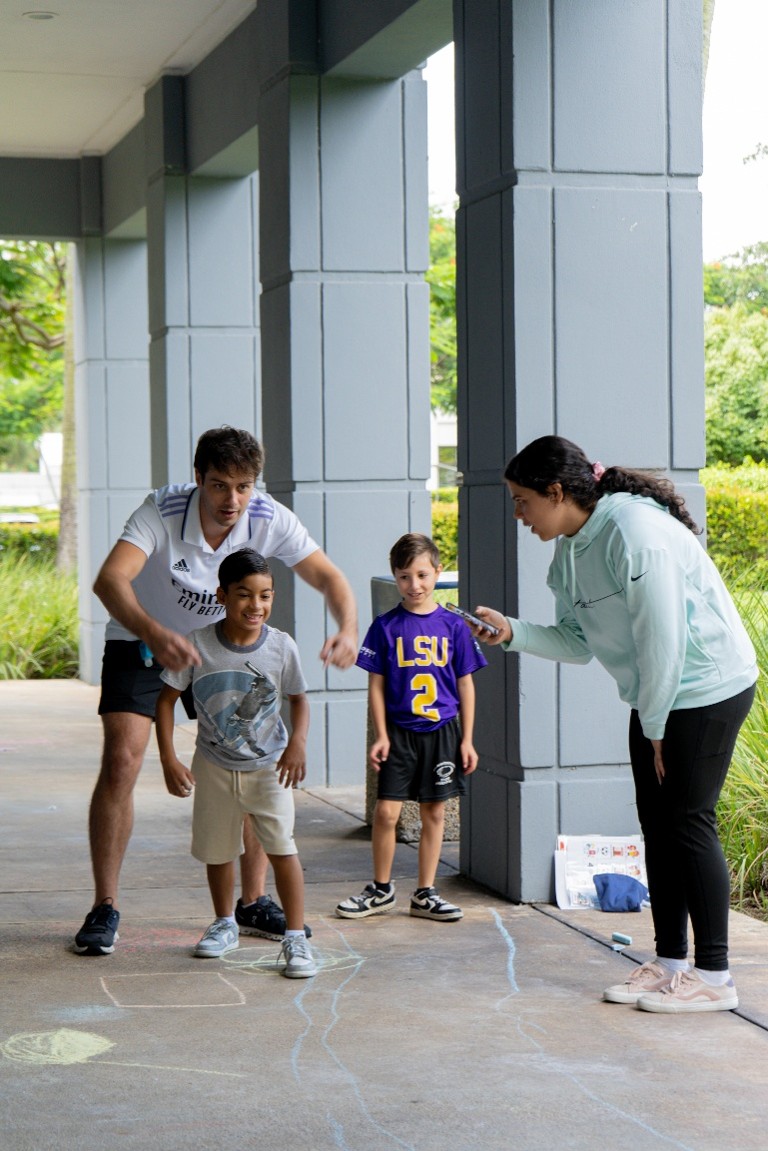
Brave Bunch counselors Claudia Marquez and Antonio Alves De Souza encouraging Christopher and Lucas to participate in an activity. (Photo by Brenda Ortiz/FIU's Center for Children and Families)