

Giving quantum computers a way to pick up where they left off
A quantum computer can solve a problem in seconds that would take a conventional computer days. But only if it can finish. The delicate quantum states that power these machines can be easily disrupted, causing errors and restarts. With access to quantum computers often very limited, every failed run can mean losing valuable time and resources.
Conventional computers today manage this problem with checkpoints, periodically saving a program’s progress so it can resume after interruption. Quantum computers, however, cannot simply copy and save an unknown quantum state in the same way. A fundamental principle of quantum physics prevents an unknown quantum state from being copied exactly. That creates a major systems challenge for quantum computing.
Computer systems designer Janki Bhimani and her team are working on the problem. They are developing approaches to quantum checkpointing that can restart quantum workflows after interruptions—preserving valuable computational progress and laying groundwork for future quantum machine-learning applications, including areas such as drug discovery and climate modeling.
Their research shows that future checkpoint systems will need to account for the properties of real quantum hardware, not just the saved data. With a focus on practical solutions, Bhimani’s team has conducted its research across multiple IBM quantum computers, studying how quantum workflows perform across different real-world hardware systems.
“Scientists working on everything from new drugs to hurricanes would benefit from saving their progress because today’s quantum computers are error-prone and can’t save. That’s what makes quantum checkpointing so exciting, the problem stretches from quantum theory to hardware limitations and finding a solution will impact science and society.”
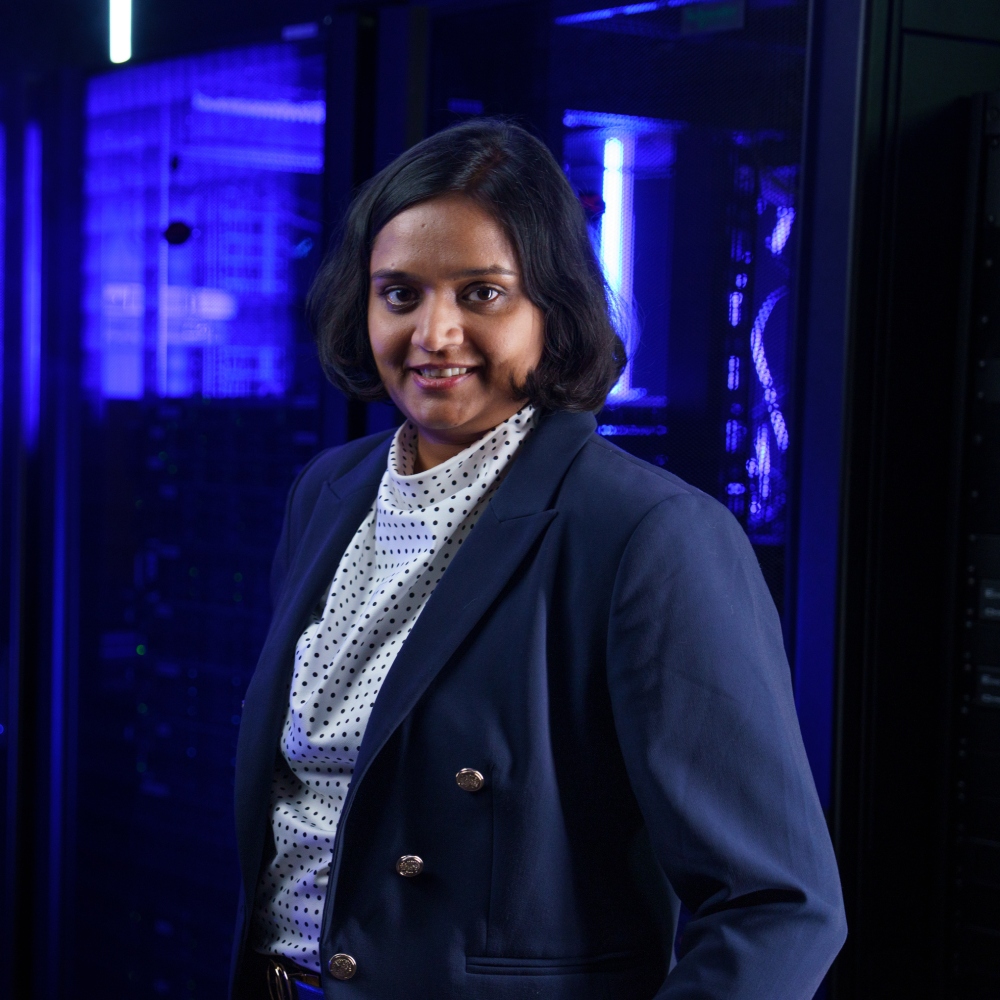
Janki Bhimani
Director of the Data Management Research Laboratory
Rising Scholar Professor of Computer Science
Knight Foundation School of Computing and Information Sciences