

Despite blindness, I explored Miami IRL during a remarkable Honors College course
I transferred to FIU as a junior in 2024, not really knowing what to expect. After a strong first year, I looked forward to choosing my senior-year classes, but there were barriers that often held me back, mostly the reality of being a student without sight. I was born with Leber Congenital Amaurosis, a rare, inherited genetic eye disorder that causes severe vision loss from infancy and is the most common cause of childhood blindness. While I’m physically fit and capable of walking independently, navigating unfamiliar environments without a sighted guide has always been a challenge. Unreliable public special transit services often kept me distant from campus life, even when I wanted to participate.
While searching for my Fall 2025 Honors College courses, I came across "Miami in Miami." The description immediately caught my attention: a class built on exploring South Florida through on-site excursions. It combined movement, travel and discovery—all things I deeply enjoy. Even though I had lived in Miami for years, I still felt disconnected from it, almost like I'm a foreigner in the place I now call home after leaving Venezuela years ago. This course felt like a chance to change that.
But one question remained: Who would walk with me? As a blind student, I couldn’t safely navigate to new places alone.
My high-school teacher of students with visual impairments once told me that often I would need to advocate for myself directly. With that advice in mind, I emailed the professor teaching the course but fully expected my request to go unnoticed as people are busy. Instead, Professor John Bailly responded with warmth and excitement. He told me, “Every challenge we encounter, we will overcome together.” Suddenly, instead of preparing for exclusion, I was preparing for the Everglades. I had assumed Miami in Miami would be a simple tourism-style class. I had no idea how deeply it would challenge me or how much it would change my relationship with the city.
One of the first places that made a real impression on me was the Deering Estate. A nationally recognized historic landmark, the Deering Estate is an archaeological site and home to diverse natural ecosystems with more than 10,000 years of human history. I arrived expecting heat and difficult terrain, but the place surprised me. The trails were calm and peaceful, almost untouched. Whenever I felt unsure of my footing, someone was right beside me, guiding me in a natural, unforced way. 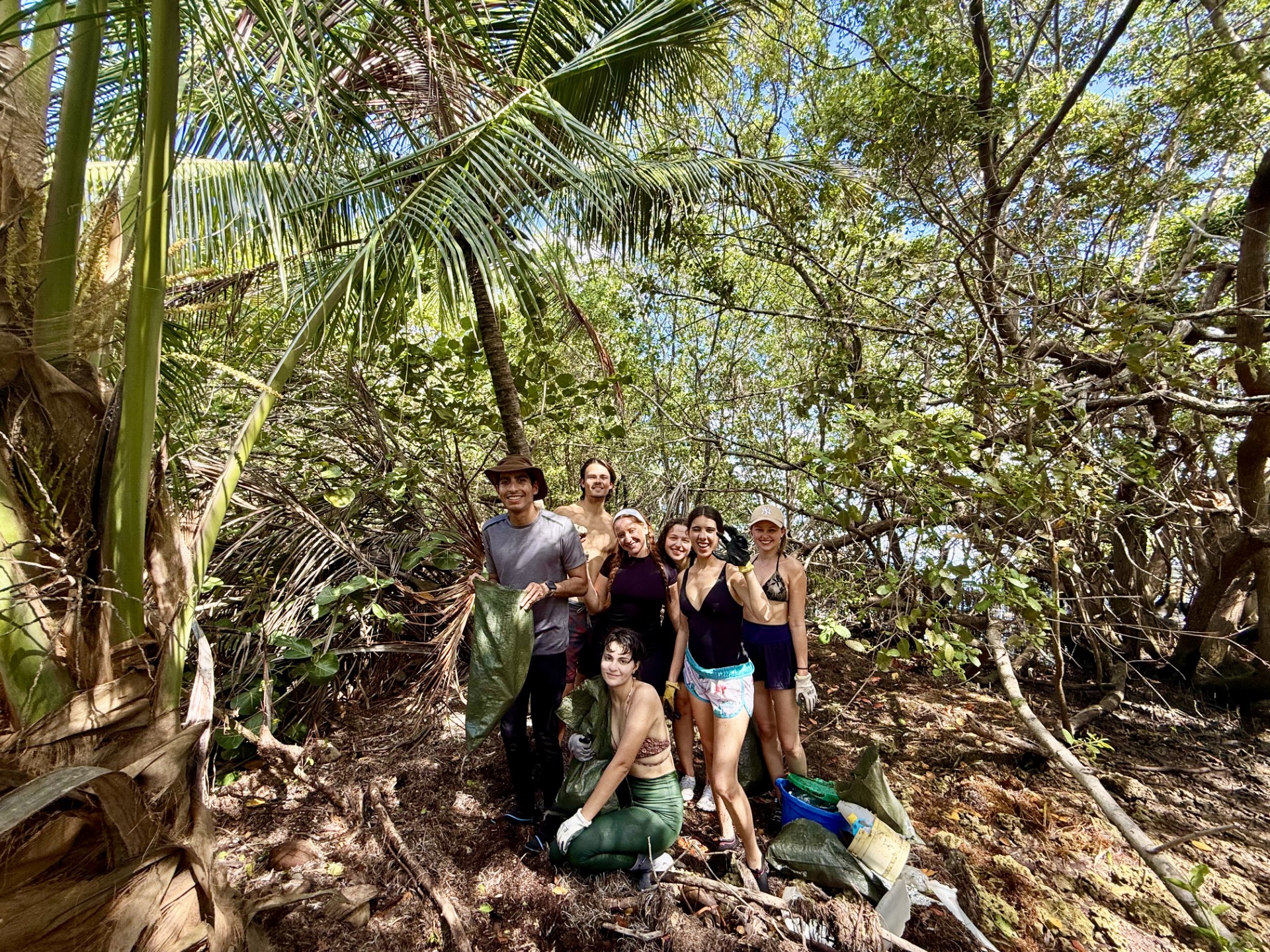
Ricardo Salazar Cermeno, far left, with fellow Honors College classmates
Over the course of the semester, I had two teaching assistants supporting me, handpicked by Professor Bailly. Those students were Daniela De Armas and Seth Locey. Seth is an Air Force veteran, and when Professor Bailly explained the endeavor of being my guide this semester, he responded without hesitation, “We’ll get it done.” Seth’s experience in the Air Force complemented Daniela’s background as a mixed martial arts fighter and surfer perfectly. Together, they are tough as nails, yet deeply empathetic when caring for me.
At one moment while at the Deering Estate, we paused after being warned about a large spider resting quietly on its web nearby. I felt uneasy at first, but it didn’t move. That stillness taught me how often fear becomes louder than reality.
Standing by the river later, listening to the water, I felt a rare sense of calm. Deering Estate felt like Miami gently introducing itself to me.
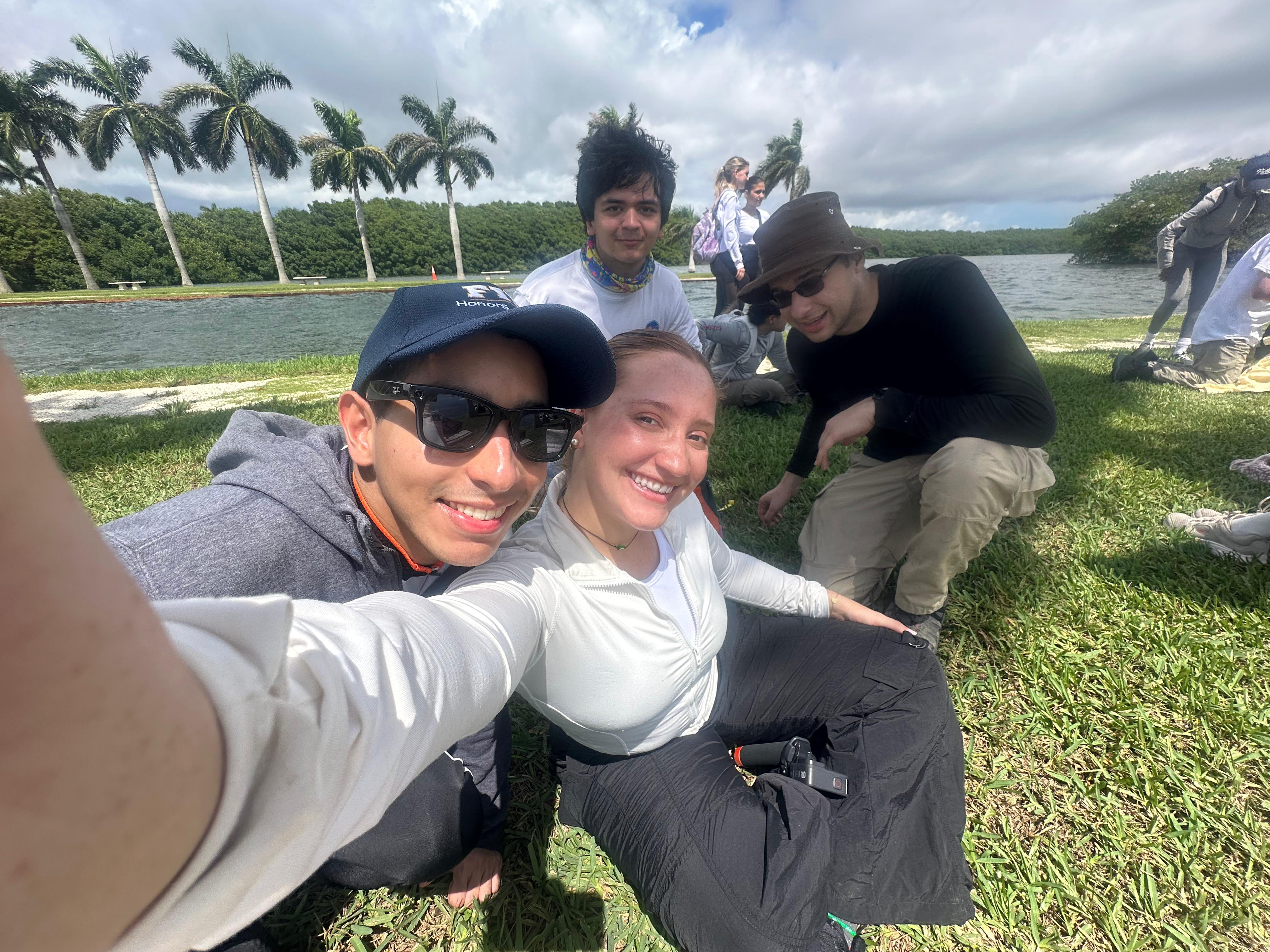
From left, Ricardo Salazar Cermeno, Daniela De Armas, Francis Mazur and Seth Locey at the Deering Estate
Another meaningful experience was our coastal cleanup at Chicken Key. At first, the plan was that I would stay in the canoe because we weren’t sure how to safely include me on the island. But Professor Bailly immediately offered to walk with me himself—and that’s exactly what he did. We moved along the shoreline together with classmates, and as everyone collected debris, he placed the items in my hands so I could feel what we were removing. Holding plastic, rope and glass made the environmental crisis painfully real. Even without sight, I experienced the Bay speaking to me through touch and sound, and for the first time, I felt fully included in an environmental effort.
A later visit to the Everglades pushed me ever farther outside of my comfort zone and most connected me with my surroundings. The slough slog felt intimidating at first, especially as we waded through water that at times rose to my waist. For someone who is completely blind, moving through a wet walk like that was a surreal and overwhelming experience. But when we paused for a moment of silence, everything opened up: I heard birds calling, water shifting around me, and wind moving through the trees. For the first time, I wasn’t struggling to orient myself—I felt completely in sync with the landscape. The Everglades taught me that sometimes the only way to understand a place, or yourself, is to slow down and listen.
None of these experiences would have been possible without the people who literally walked with me. They didn’t just assist me—they shared the journey. They walked beside me during hikes, kayaked with me, helped me through difficult terrain and made sure I was fully included every day. Their kindness made me feel safe and seen.
The class became meaningful not only because of the places we visited, but because of the people who chose to walk with me.