

Ultimate insider view: Students sit down with cruise industry CEOs
As a graduate student studying cruise line operations management within the Chaplin School of Hospitality & Tourism Management, I recently had the privilege of being invited to the table, so to speak, for the South Florida Business Journal's Power Leaders Roundtable that focused on the future of small-ship, ultra-luxury cruising.
From my perspective as a cruise major, the conversation reinforced what I am learning every day at FIU: The cruise industry is not only growing but also creating real career pathways for students willing to learn, work hard and prepare themselves for leadership. One of the most powerful messages I took away from my time in the room with CEOs and presidents of top cruise brands was that people who start at the low end in the industry can become president. That statement stood out to me because it reflects the upward mobility that FIU’s cruise curriculum is designed to support.
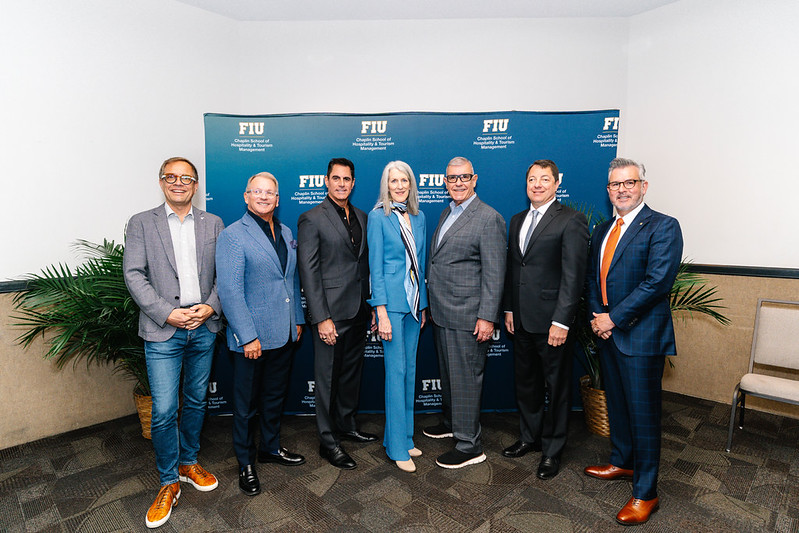
Power leaders roundtable (from left): Christopher Prelog, president, Windstar Cruises; Chris Austin, president, North America, Explora Journeys; Ken Muskat, president, Scenic Group; Anne Kalosh, senior associate editor, Seatrade Cruise Review; Larry Pimentel, FIU cruise executive-in-residence and consultant; Jonathan L. Wilson, president and CEO, Aman at Sea; James A. Rodriguez, president and CEO, Atlas Ocean Voyages
FIU's cruise executive-in-residence Larry Pimentel, who served as roundtable host, along with SeaTrade Cruise news editor and senior associate editor of Seatrade Cruise Review Anne Kalosh, described FIU’s program as a bridge between academics and industry. “We want to train future leaders,” he said, noting that FIU is the only university with both bachelor’s and master’s degrees in cruise operations. The program gives students practical access to the cruise industry in Miami, the cruise capital of the world.
FIU’s approach is valuable for its immersive, hands-on learning. Students in hospitality, business and engineering get to understand operational decision-making at sea, and still more - through planned simulators and other platforms - is anticipated in the near future as part of comprehensive preparation.
The roundtable highlighted product differentiation and human capital. Leaders from emerging luxury and expedition brands noted the market is deepening, with guests seeking authentic and transformative experiences. One leader said, “It’s no longer about the thread count.” Service excellence, operational discipline, and strong leadership remain key. Christopher Prelog of Windstar Cruises described the goal as creating “a new differentiated ocean experience” and noted growth rewards passionate, prepared, and driven individuals.
FIU currently links classroom learning to research and industry and in the future will include sharing annual analytics with cruise executives to explore deployment, yield management, workforce needs and crew operations. As the student-founder of the new FIU Cruise Club, which will launch during the fall semester, my goal is to contribute to creating real-world learning, industry engagement and internship opportunities
For me, this event confirmed that FIU is preparing students not only to enter the cruise industry but to lead it. By combining academic learning, realistic simulations and direct industry collaboration, FIU is helping build the next generation of cruise professionals. As Jonathan L. Wilson, CEO of Aman at Sea, summarized, “The only thing I have to get right is the people. Everything else is largely fixable.”
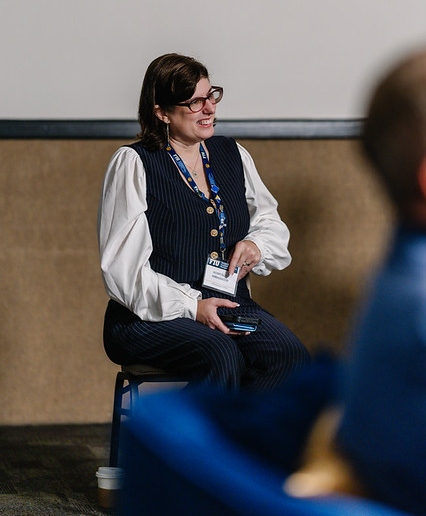
Jennifer Brande