
The chemist improving how detection dogs sniff out danger
Chemist Lauryn DeGreeff is committed to making explosive and drug searching more effective and safer for detection dogs.
In her latest research, DeGreeff put bombsniffing standards to the test, investigating effectiveness of training and opportunities to improve outcomes. The study revealed a dog’s effectiveness is often tied to training resources, including the availability of practice substances and locations for training. But it’s not just about more is better. In some cases, dogs learned shortcuts in training to get rewards faster, so the training methods are also important.
In addition, DeGreeff is collaborating with the Naval Research Laboratory to improve fentanyl detection, including a new method that relies on technology to safely and accurately detect the potent drug. Her method is designed to address the challenges created by fentanyl’s low odor signature by focusing on a specific chemical compound that is detectable in fentanyl’s vapor signature. This work is funded by the National Institute of Justice.
DeGreeff and her students are also working to identify the chemical compound dogs are detecting when they alert to the presence of fentanyl, with the hopes of creating more targeted and efficient training strategies for canine fentanyl detection.
Next, she plans to expand her research to include other drugs, including cocaine, heroin, meth, ecstasy and xylazine.
Combining methods that include improved canine detection and technological advancements could enhance detection accuracy across the board.
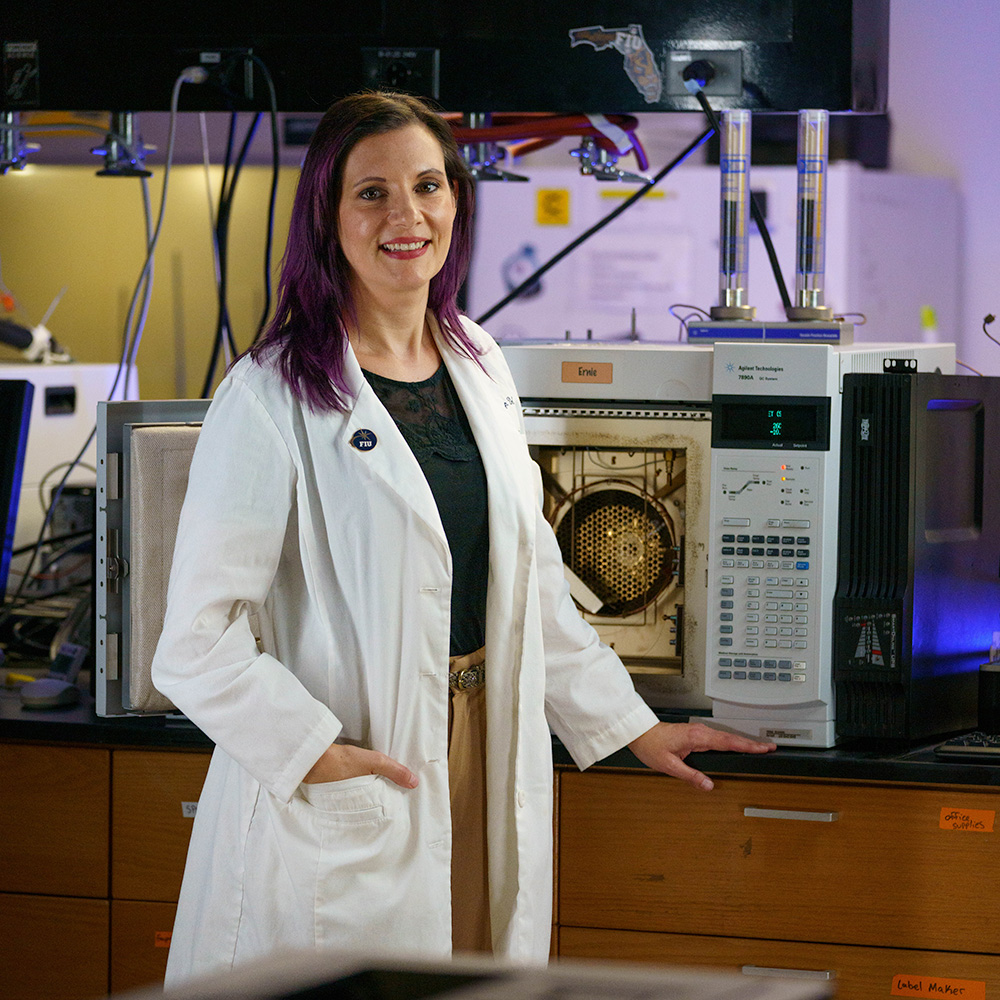
Lauryn DeGreeff
Associate Professor of Chemistry
College of Arts, Sciences & Education
“Bringing instruments and dogs together is the best way to go. The end goal is the same, but they get there in different ways. If they both say, ‘yes,’ that’s a much stronger yes.”