

What if you walked into a hotel and were greeted by an AI robot who was programmed to have the answers to every question you could imagine?
This isn’t a distant, dystopian future. This is happening right here and now.
FIU’s Chaplin School of Hospitality & Tourism Management recently welcomed more than 300 industry representatives, students and faculty to Technology, Innovation and Entrepreneurship Day (TIED) @ the Bay, a one-day experience bringing current and future industry leaders together to explore how technology is shaping hospitality.
The event also introduced the most intriguing advances in hospitality technology. From life-sized robots to smart assistants, here are four tech innovations set to completely change the hospitality industry and your next hotel stay or restaurant visit as we know it.
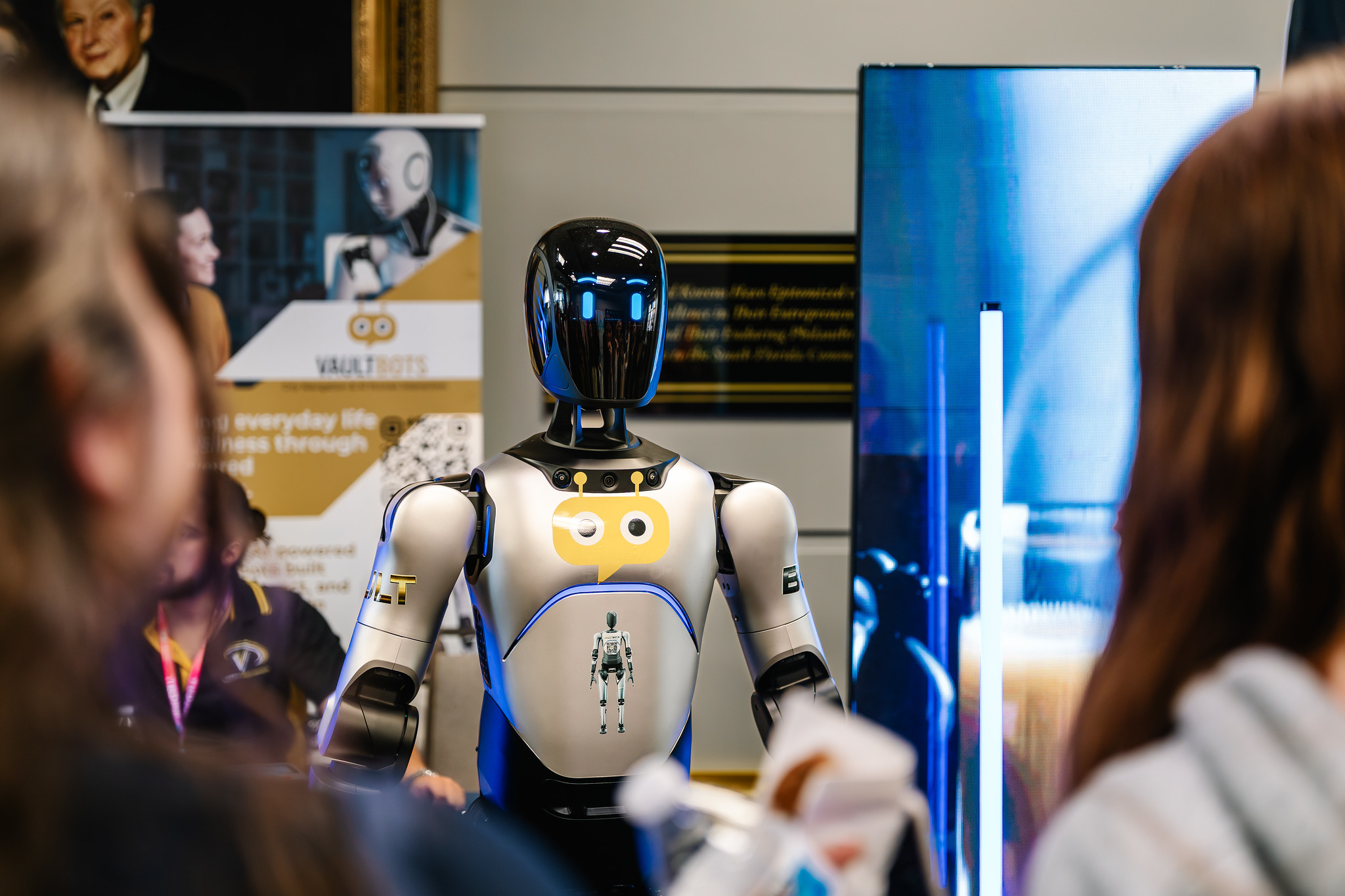
Luka interacted with students and guests at TIED @ the Bay.
Robotics
Luka is 5-foot-7, 150 pounds, can walk, talk and serve your drinks. He’s also a robot.
VaultBots showcased the A2 robot called Luka, a humanoid powered by artificial intelligence with 96% human motion and a 150+ IQ.
For students, it offered a real-life demonstration of how robots could be incorporated into hospitality, including through concierge services, guest engagement and ambient presence in hotels.
The robot itself has the physical capability to lift 30 pounds and the dexterity to sew a needle. Paired with AI, it becomes revolutionary, able to understand guest questions and respond in real time.
“Everybody has their own vision with these robots,” said Gary Khachatryan, CEO and founder of VaultBots. “I’m excited to see what the students have. And it’s a bright future.”
At this rate, it might not be long until a robot serves you a latte.
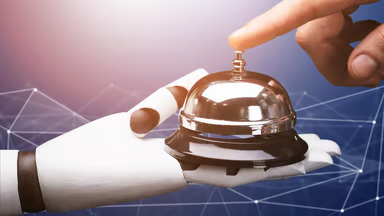
AI concierge services are already being used in hotels like Hilton and Marriott. (iStock/Getty Images Plus/AndreyPopov)
Conversational AI
Hospitality is one of the most global industries; Marriott alone has more than 9,000 hotels across 143 countries and territories.
With such an international reach, there are barriers like language. Jessie Fischer created GuestOS, an AI-powered concierge, to push past that very obstacle.
During a breakout session, Fischer showcased how conversational AI works, feeding it a sentence and picking the language into which it would translate instantly. Students observed as the tool seamlessly transitioned from Spanish to Chinese.
“Language barriers impact how people express their needs,” said Fischer, Founder & CEO at GuestOS.
The platform supports nearly 100 languages, making it as simple as the click of a button to communicate with guests from around the world.
Tools like conversational AI are meant to take care of the mundane questions so humans can focus on connecting with guests.
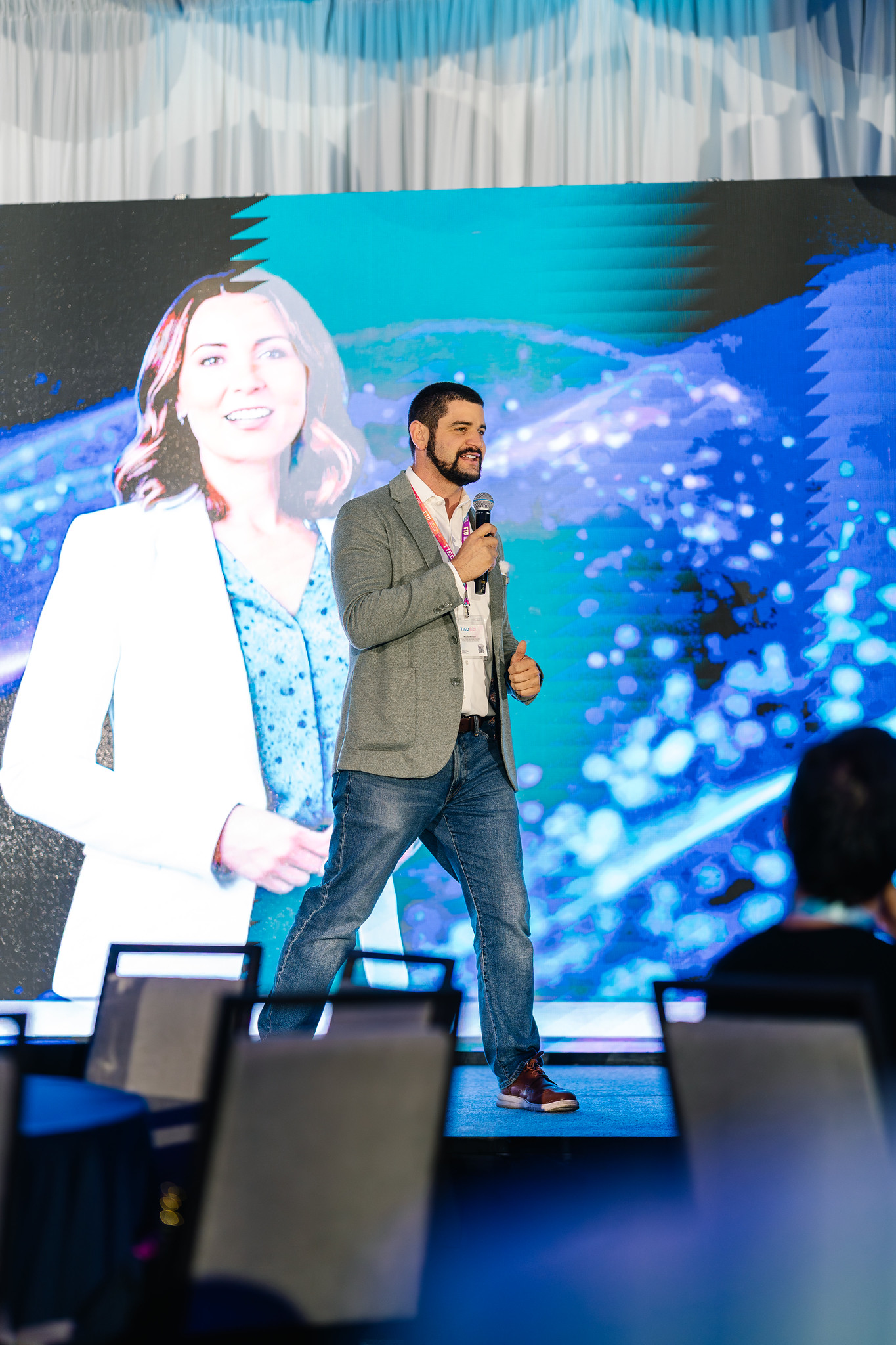
Smart assistants like Penelope Apple can be further developed into live AI avatars.
Smart Assistants
Who needs an event MC when an AI-generated assistant can introduce speakers for you?
Penelope Apple was created by Dale Gomez, associate professor at the Chaplin School and host of TIED @ the Bay, originally as an AI agent to help support his hospitality information and technology class. Trained on topics covered in the course, the agent answers students' questions related to hospitality technology.
Penelope Apple introduced guests, transitioned from one topic to the next and demonstrated the wondrous capability of AI in a live setting.
In the classroom, students get one-on-one interaction with a model like this, gaining a deeper understanding of what happens when you input the right information into an AI tool.
For the upcoming year, Gomez plans to completely restructure his class to fit the quickly changing landscape of hospitality technology. “Close to half of the class will be based off AI because that’s where the future is,” said Gomez.
This video was completely created with generative AI using the Open AI platform Google Gemini.
Generative AI
Probably one of the most talked about and controversial technology tools today is generative AI. In seconds, it can create videos, marketing campaigns, and flyers that might otherwise take days, weeks, and even months for a human marketing team to produce.
The big fear that comes with generative AI: Will it replace humans?
According to Jennifer Jones, Vice President of Global Data and Analytics and Regional CIO at Bacardi and keynote speaker at TIED @ the Bay, “Human connection is a key part of the AI experience, and to me that’s what makes humans irreplaceable.”
In hospitality, generative AI can be used to spark creativity and show the potential of an idea before it's created. For example, it can come up with a marketing plan for a restaurant, create menus, discuss audience, make scripts for servers and devise video promotions, all which can then be used as a template for humans to create their own version.
Jones explains how crucial it is for AI to be fed the right data, “A great cocktail isn’t about one perfect ingredient. It's about everything working together, made real by a skilled hand.”
In an industry built around people, human touch remains the most fundamental part.
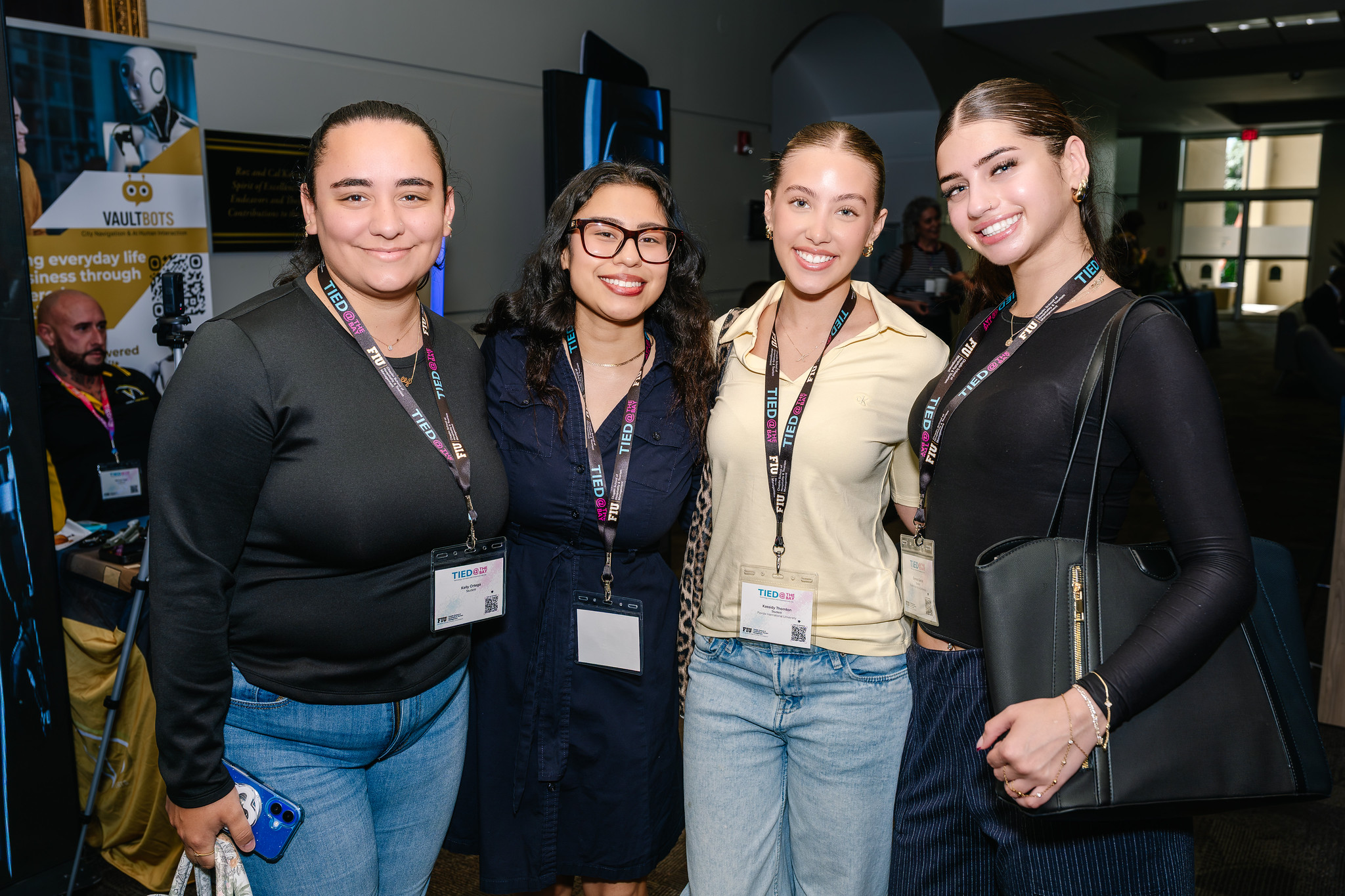
TIED @ the Bay offered students a look into the future and, as Gomez puts it, “Bridges the gap between industry and academia to showcase what’s out there in the hospitality technology space.”
As technology races through every industry, there’s only one thing to do: Keep up with the pace.