A few weeks ago, I had the opportunity to speak to an incredible group of over 100 educators taking part in a civics professional development course about what made our Founders successful in launching the American Experiment. They did not invent the concepts of a republic, democracy, constitution, federalism or the separation of powers, but they were the first to take real steps toward political freedom and eventually to actualize those ideas in the Declaration of Independence. Eventually this momentum would lead to the authoring and adoption of the U.S. Constitution, the world’s oldest written charter of government still in force, which has been amended 27 times in our long journey toward “a more perfect union.”
What the Founders set in motion has been tested and endured in ways they could never have foreseen. In two and a half centuries, we have grown from 13 colonies along the Atlantic into a continental nation of more than 330 million people. We won our independence at Yorktown, preserved the Union at Gettysburg, and helped liberate Europe at Normandy. We fought battles of conscience every bit as decisive as those waged with muskets, ending slavery, extending suffrage, and lowering the voting age, each one a hard step toward the promise that all are created equal. The achievements are staggering, and so was their cost.
During our discussions, I shared that it is on us to help young people understand our system of government, and that our American experiment still requires active citizenship. We must do whatever it takes to ensure that every American is not only civically literate but civically engaged. If a college student can explain the rules of Love Island USA, they must be able to explain the Electoral College.
As we celebrate America’s 250th birthday, I thought it fitting to share some of the many lessons that stand out about our founding, our Founders, the importance of education, and how they navigated profound political differences.
1. The Declaration of Independence’s last paragraph matters as much as the first
The Declaration is most often quoted for its soaring opening preamble: “We hold these truths to be self-evident..”. However, the Declaration’s real force is in its final paragraph, where the signers stop philosophizing and actually commit to a shared vision of the future. There they dissolve all allegiance to the Crown and claim, in plain legal language, the sovereign powers of a free state: "to levy war, conclude peace, contract alliances, and establish commerce." The signers "pledged to one another their lives, their fortunes, and their sacred honor."
We, therefore, the Representatives of the united States of America, in General Congress, Assembled, appealing to the Supreme Judge of the world for the rectitude of our intentions, do, in the Name, and by Authority of the good People of these Colonies, solemnly publish and declare, That these United Colonies are, and of Right ought to be Free and Independent States; that they are Absolved from all Allegiance to the British Crown … and that as Free and Independent States, they have full Power to levy War, conclude Peace, contract Alliances, establish Commerce, and to do all other Acts and Things which Independent States may of right do. And for the support of this Declaration, with a firm reliance on the protection of divine Providence, we mutually pledge to each other our Lives, our Fortunes and our sacred Honor.
Declaration of Independence, July 4, 1776
That closing is what turned a statement of principle into a statement of union: a charge sheet against the king and an invitation for other nations to recognize, support, and ally with a new country. And the world answered. The signers had, without quite realizing it, invented a genre. In 1789, the French produced their Declaration of the Rights of Man and of the Citizen, with Marquis de Lafayette drafting and Jefferson nearby. Jean-Jacques Dessalines and François-Dominique Toussaint Louverture proclaimed Haiti’s independence in 1804. Simón Bolívar and the liberators of Latin America borrowed its logic. Historians count more than a hundred declarations of independence issued worldwide since 1776, most echoing a form first cut in Philadelphia. The genius was not only the ideals at the beginning; it was the operative act at the end.
2. Knowing the world around us, through education both formal and informal, was the Founders’ real inheritance
When representatives from the British American colonies assembled in Philadelphia in the summer of 1776, their work was nearly impossible. They had to coalesce around a single path forward: petition the king (again), rebel, or wait. Benjamin Franklin is said to have given his immortal line: “We must all hang together, or assuredly we shall all hang separately.” They risked everything to assert the rights they believed they held as English citizens.
Nearly half of the 56 signers had attended college, and many of the others had apprenticed into the medical and legal professions. They knew the great ideas of Enlightenment thinkers (Thomas Hobbes, John Locke, Jean-Jacques Rousseau), and they used their learning to argue precisely what had been done to them. In 27 grievances, they laid out how the king (and Parliament) had betrayed them. Locke’s language is the one you can almost hear behind the parchment: life, liberty, and property became life, liberty, and the pursuit of happiness.
An exception was George Washington, who was never given the opportunity of higher education but proved to be an impassioned, self-taught, lifelong learner. Our FIU in DC students visit Mount Vernon each semester and can still see parts of his personal library, highlighting how knowledge is a lifelong requirement.

The lesson holds 250 years later: A people who mean to govern themselves must understand the world around them, and they must be committed to lifelong learning, civic life, and active participation in building the future.
3. There were university founders and leaders among the Founders
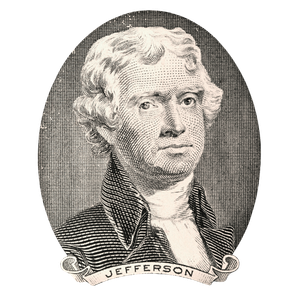
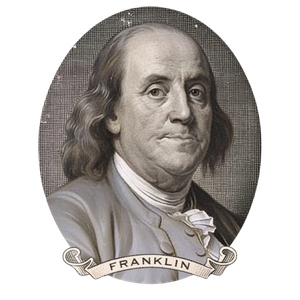
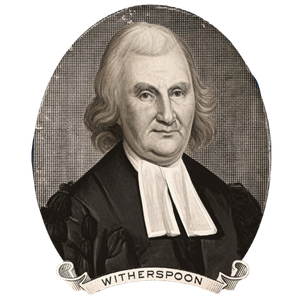
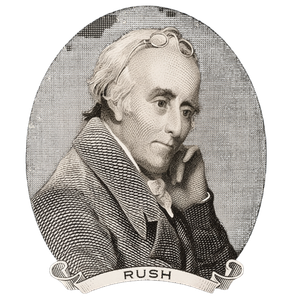
These leaders did not value education only in the abstract; many of them built the institutions. Thomas Jefferson founded the University of Virginia and was so proud of this achievement that he had it carved on his headstone, alongside “Author of the American Declaration of Independence.” Benjamin Franklin helped create what became the University of Pennsylvania. John Witherspoon, a fellow signer, served as president of the College of New Jersey, today’s Princeton. Benjamin Rush, another signer, was a professor of chemistry who went on to establish Dickinson College, and George Wythe, who taught the young Jefferson, became the nation’s first professor of law at the College of William and Mary. They were convinced the republic could not survive without an educated citizenry, and they put institutions in the ground to prove it.
But the Founders’ most original contribution to higher education was not any single college; it was the public university itself, and it sprang directly from the sovereignty the Declaration created. The moment the colonies became states, they wrote their own constitutions, and some wrote schooling into the founding law. North Carolina’s 1776 constitution directed the state to establish a university supported by public funds; that mandate became the University of North Carolina, chartered in 1789 and opened in 1795 as the first state university in the nation to open its doors. Georgia had chartered its university even earlier, in 1785, and in his own newly independent Virginia, Jefferson would later build his public university at Charlottesville. A new kind of institution, owned by the people of a state and in service of its citizens, was born of independence itself.
Florida International University is an heir to that lineage, a public research university created by the State of Florida nearly 200 years after our founding, and it does many of the things I believe the Founders hoped a university would: it discovers, it teaches, it scales, and it expands opportunities for its students, faculty and communities. FIU has earned the Carnegie R1 designation for very high research activity. It is highly recognized for teaching and instruction in the classrooms, and labs. The Herbert Wertheim College of Medicine has placed 100% of its graduating physicians into residencies for four straight years and the College of Law is a national leader in academic excellence, outcomes and bar passage rates. FIU operates at a scale the Founders could scarcely have imagined: nearly 54,000 students (more than the entire population of Philadelphia in 1776) and more than 350,000 alumni, most of whom stay and build their careers in Florida.

FIU is one of only 21 universities in the country to hold both the R1 research designation and the Carnegie Opportunity Colleges & Universities designation at once, the whole American argument in miniature: excellence and access are not rivals. When Jefferson wrote “the pursuit of happiness,” he did not mean a feeling; in the language of his century it meant the freedom to better one’s condition, to rise. That is economic and social mobility, and U.S. News & World Report ranks FIU No. 1 in the nation for it. More than half of FIU’s undergraduates are eligible for Pell Grants, and they graduate at higher rates than their peers.
4. Innovation is written into the Constitution itself
Liberty is hollow if a person cannot benefit from the work of their own mind, and the Founders knew it. When they sat down eleven years after the Declaration to write the Constitution, they wrote that conviction directly into the nation’s operating manual. Article I gives Congress the power “to promote the Progress of Science and useful Arts, by securing for limited Times to Authors and Inventors the exclusive Right to their respective Writings and Discoveries.”
Two centuries later, Congress doubled down with the Bayh-Dole Act of 1980, which let universities patent and commercialize the discoveries born of federally funded research, turning campus laboratories into companies, treatments, and jobs.
You can see that engine running at universities across the country, including FIU. In 2024 alone, FIU researchers were awarded 55 U.S. utility patents, placing it among the top 30 public universities in the country and, for the eighth consecutive year, on the National Academy of Inventors’ Top 100 Worldwide list. Those inventions are not abstractions: systems for detecting Alzheimer’s disease earlier, transforming cancer treatment with precision medicine, rapid tests for the quality of the concrete in our infrastructure, new antibacterial drugs. Faculty translate those discoveries into ventures that reach the public. The Founders’ wager, that protected ideas would compound into national prosperity, is being settled in our labs every year.

5. They were bitter rivals and flawed men, and they died on the same Fourth of July
It is tempting to flatten the Founders into marble. They were human. John Adams and Thomas Jefferson were bitter political rivals, opponents in a presidential election ugly enough to rival anything we see today. (Jefferson, the losing candidate in the election of 1796, had the unenviable task of serving as the vice president to Adams.)
Yet, late in life, Adams and Jefferson reconciled. In a remarkable correspondence, two old rivals wrote their way back to friendship over a shared love of country and the unfinished work of building it. They died on the same day, July 4, 1826, exactly fifty years to the day after the adoption of the Declaration of Independence. Adams’ last words were recorded to be “Thomas Jefferson Lives” though Jefferson had passed away hours earlier at Monticello.
They were also flawed in ways we should not look past: Jefferson, who wrote that all men are created equal, enslaved more than 600 individuals over the course of his life. The ideals they declared outran the lives they led. The country has spent 250 years, through abolition, reconstruction, suffrage, and civil rights, trying to close that gap and earn the words.
That is the real meaning of the semiquincentennial. The Founders did not hand us a finished country; they handed us a charter and a challenge. Their work keeps being renewed: in a laboratory where a patent becomes a cure, in a classroom where students find their footing, in every graduate who pledges, in their own way, their life and their fortune and their sacred honor to the experiment.
For me, I get to witness that renewal every day at FIU and what a blessing it is.
Happy 250th birthday, America, and thank you to those who sacrificed themselves for us to celebrate today.
Anthony A. Rionda ’09, MPA ’11, JD ’21, is a university administrator, senior fellow in the Honors College, and adjunct professor in the College of Law at FIU. His lifelong fascination with history began when his grandmother gave him her 1932 New York City P.S. 32 History Award and was nurtured through endless games of Jeopardy!, family stories and trips—including a memorable visit to Valley Forge—and exceptional teachers. He is especially grateful to the history educators at Christopher Columbus High School and FIU who challenge their students to think more deeply about the past and its relevance today, including Brian Peterson, Mary McCullough, Craig Cunningham, Matthew Mirow, and the late John Stack Jr.