

From the Florida Keys to French Polynesia, two FIU graduate students now have backing from the Guy Harvey Foundation to advance their research on sharks in marine ecosystems around the world.
Gina Clementi and Sophia Hemsi have been awarded 2026 Guy Harvey and Florida Sea Grant Fellowships to support their studies. Clementi is studying how recreational fishing may influence interactions between sharks and fish spawning aggregations in the Florida Keys, while Hemsi is investigating shark social behavior, focusing on how juvenile sharks interact with one another as they mature into adulthood.
The Guy Harvey Foundation and Florida Sea Grant offer fellowships to university students in Florida studying marine science and preparing to become future leaders in ocean conservation. Each recipient receives a $5,000 award to support their research and academic pursuits.
Clementi's research tracks shark movements and analyzes their diets to determine whether sharks are naturally targeting spawning fish or whether fishing activity contributes to those encounters. Fish caught during recreational fishing are often hooked and stressed, making them more vulnerable to predation. Her research will help determine whether sharks are taking advantage of these easier feeding opportunities compared to periods when anglers are not present.
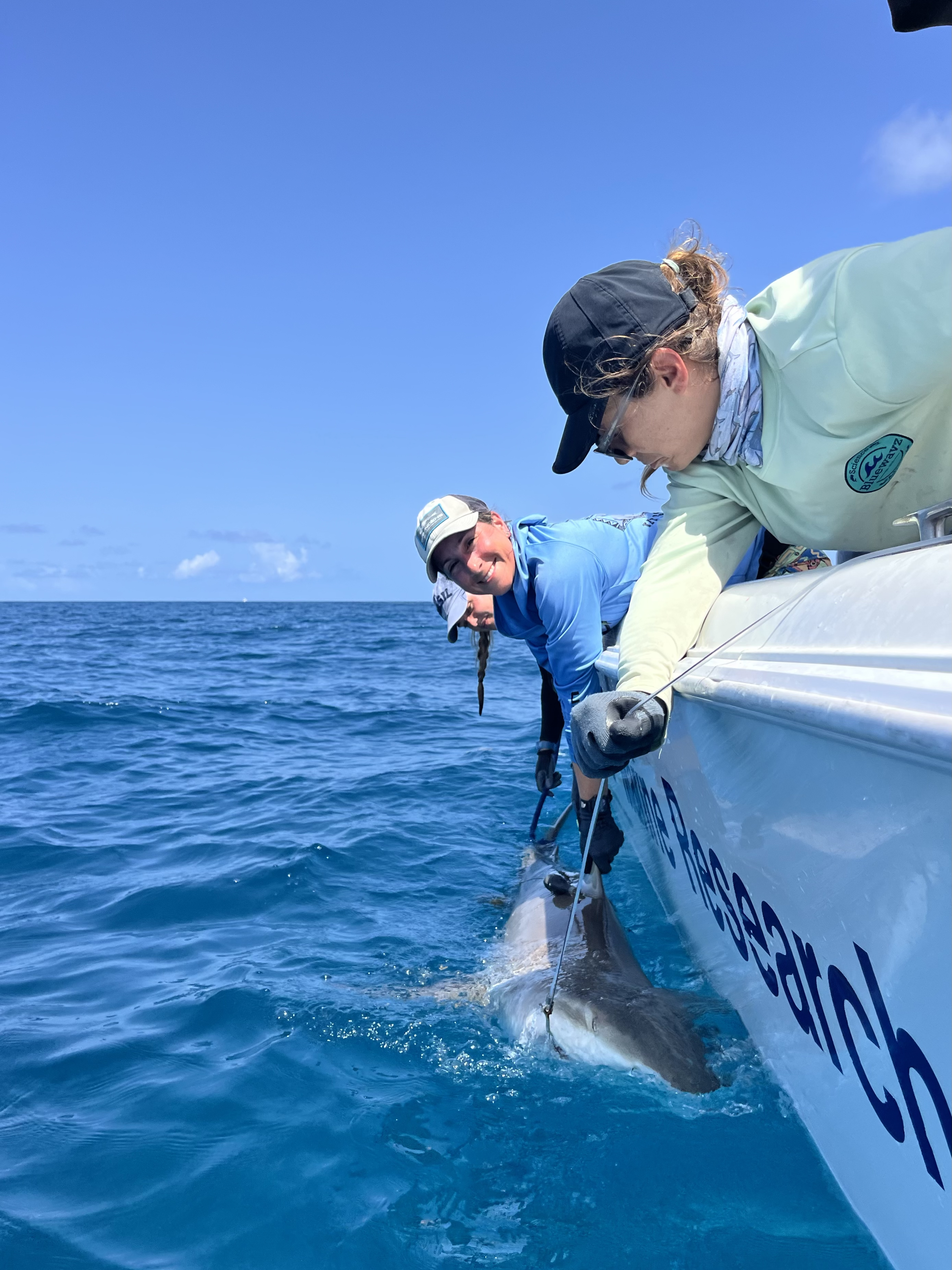
Fish gathering to spawn — the process in which they release eggs and sperm into the water to reproduce — are critical to the survival of many reef fish species. Clementi said she hopes her findings will help fisheries managers better understand whether seasonal fishing closures are protecting these important habitats and reducing shark depredation.
“People are going out and angling them and releasing them,” she said. “If 50 percent of your catch is getting depredated by sharks, then you are inducing some level of mortality to the fishery.”
If too many are caught before they have a chance to reproduce, fewer baby fish are produced and the population can decline, Clementi said.
The fellowship funding will support the collection and analysis of shark fecal samples so Clementi can better understand shark diets during fish spawning events.
Hemsi's research focuses on the social behavior of juvenile sicklefin lemon sharks and blacktip sharks in Tetiaroa Atoll, a remote nursery habitat in French Polynesia. She is studying how young sharks interact with one another, how their behavior changes as they grow and how those behaviors differ between species. Because Tetiaroa is a relatively undisturbed ecosystem, researchers can observe shark behavior in its natural state rather than in environments heavily influenced by human activity.
"It's a rare opportunity to study shark behavior and group dynamics in a minimally impacted system, and to better understand how they change with age and differ between species," Hemsi said.
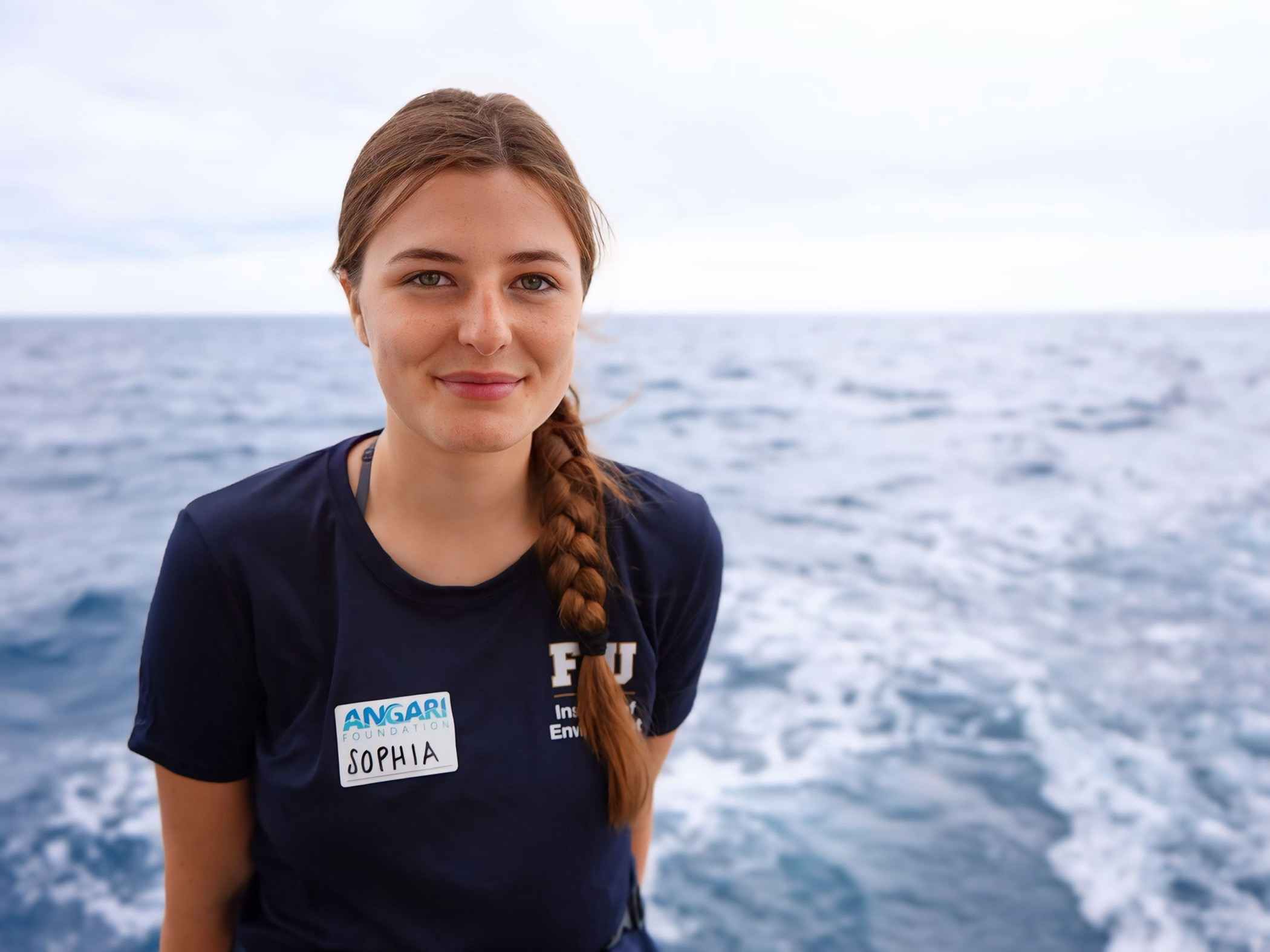
Her work could help researchers understand how sharks use nursery habitats throughout different stages of life and establish a scientific baseline for future conservation efforts.
The Guy Harvey and Florida Sea Grant Fellowship will help support the fieldwork and data collection needed to launch and sustain her dissertation research.
Since 2010, the Guy Harvey Foundation and Florida Sea Grant have provided more than $500,000 in scholarship funding to support marine science students across Florida and help develop future marine researchers and conservationists.