

Alumnus named early heart researcher of the year
One person dies every 34 seconds from cardiovascular disease. Heart problems plague thousands of people, including children: about 40,000 babies are born each year with congenital heart defects.
These numbers are staggering. Billions of lives are impacted around the world.
Daniel Chaparro ’18, Ph.D. ’25 is a researcher working hard to uncover the underlying biological mechanisms of cardiovascular disease and ways to improve treatment capabilities for children with congenital heart defects. A biomedical engineer at the Herbert Wertheim College of Medicine, Chaparro focuses on cardiovascular tissue engineering and the preservation of living heart valve replacements (known as a “grafts”) for transplants.
For his work, Chaparro was recently named the 2026 Florida Heart Research Foundation’s “Stop Heart Disease Early Career Researcher of the Year.” He received the award this week during the annual meeting of the Florida Chapter of the American College of Cardiology, which was held in Orlando. The award recognizes and promotes excellence in cardiovascular research throughout Florida and comes with a $50,000 prize for the honoree.
“The award means so much to me,” Chaparro says. “One of my mentors, Dr. Joshua Hutcheson, and one of my lab mates have both received this award. Receiving the same award cements the fact that I’m on the right path to becoming a successful researcher. FIU is making huge strides toward becoming a powerhouse in cardiovascular research, and I’m happy to be part of it.”
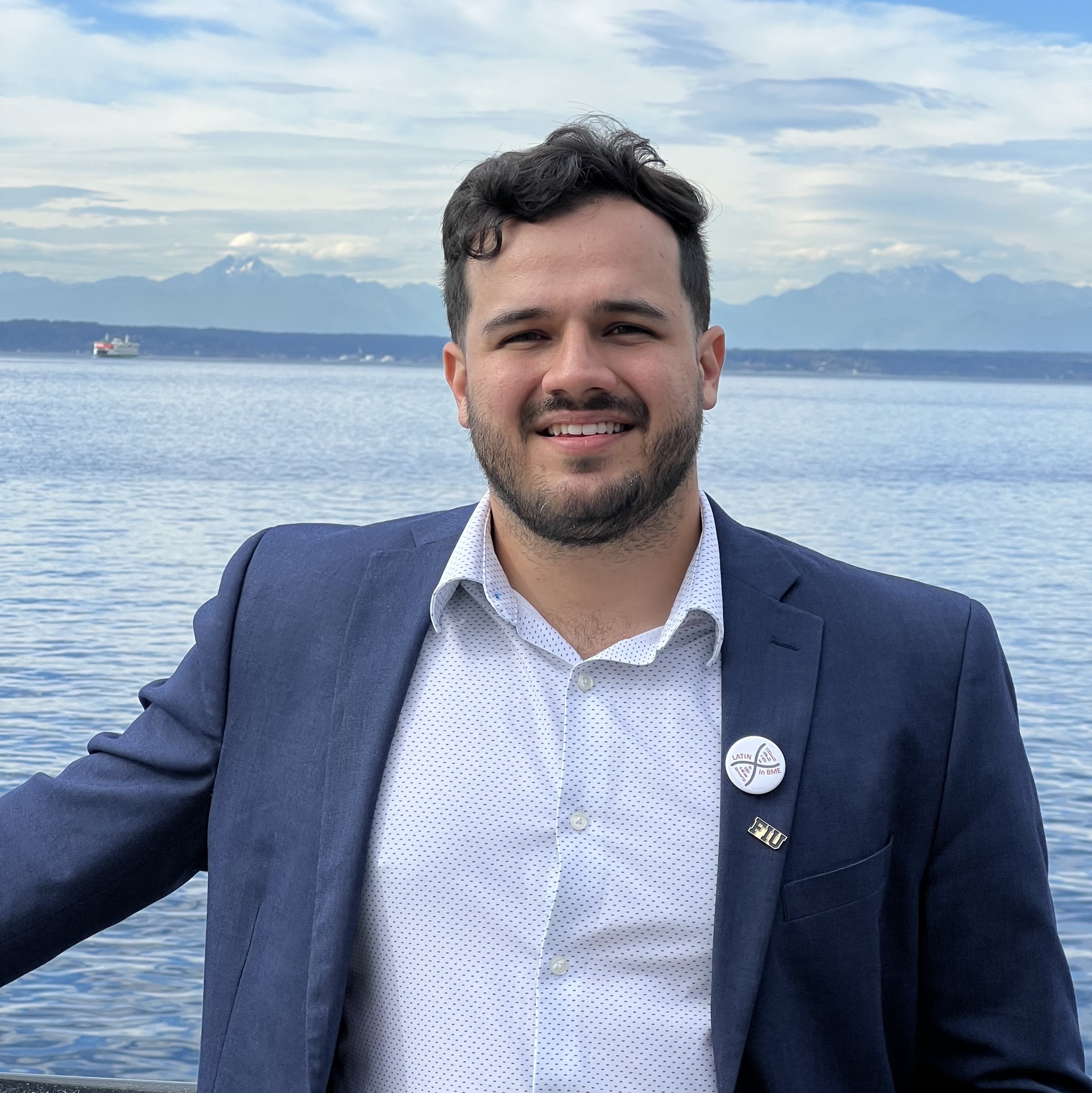
Chaparro began his journey researching the heart as an undergraduate at FIU. He took a class with Joshua Hutcheson, who is an associate professor of biomedical engineering and the director of the FIU-Florida Heart Research Foundation Center for Innovation in Cardiovascular Health.
“Danny was a student in the first class I ever taught at FIU,” Hutcheson recalls. “Right away, he was one of the students that made teaching fun. His enthusiasm, his asking questions, his genuine curiosity to learn more about whatever subject we were discussing…I saw that innate curiosity combined with a very high level of intelligence.”
Chaparro took a job as a research assistant in Hutcheson’s Cardiovascular Matrix Remodeling Lab. “He seemed to really enjoy it,” Hutcheson says. “I started talking to him about what a Ph.D. could look like.”
Hutcheson demystified the whole Ph.D. process and shared information with him about funding opportunities. Chaparro decided to pursue the advanced degree.
As a doctoral student, Chaparro conducted key research in Hutcheson’s lab. He analyzed a wealth of cardiovascular tissue samples to understand the root causes of cardiovascular disease. “He was extremely productive,” Hutcheson recalls. “In lab meetings, he would lead conversations, and he just became an example for all the other students. Early on, he was someone that I thought of as a colleague.”
Heart of the matter
Today, Chaparro is part of the research team in the Kalfa Lab for Congenital Heart Research at Herbert Wertheim College of Medicine, led by Dr. David Kalfa. A professor in the departments of pediatrics and surgery, Kalfa is an internationally recognized expert in pediatric congenital cardiac surgery. He also serves as chief of cardiovascular surgery and co-director of the Nicklaus Children’s Heart Institute, where he performs complex heart surgeries on children.
In his role, Chaparro focuses on developing a bioreactor tissue culture system – a device used to grow tissues - that will maintain heart tissue alive and functioning properly for an extended period of time. This would advance current systems that require heart valves to be immediately transplanted into pediatric patients.
Why is it important to extend the “shelf life” of cardiac valves meant for transplantation? Medical professionals must often race to get a donor’s heart quickly to where another patient with congenital heart defects is being treated.
“Twenty percent of the hearts for transplants are lost due to logistics,” Chaparro explains. “Sometimes the patient is too far or there is a size mismatch.”
Enter Kalfa’s lab and Chaparro for a solution. “If we could store the valves for a short period of time instead of the valve having to be transplanted immediately, we could help thousands of kids, and that’s only in the United States,” says Chaparro.
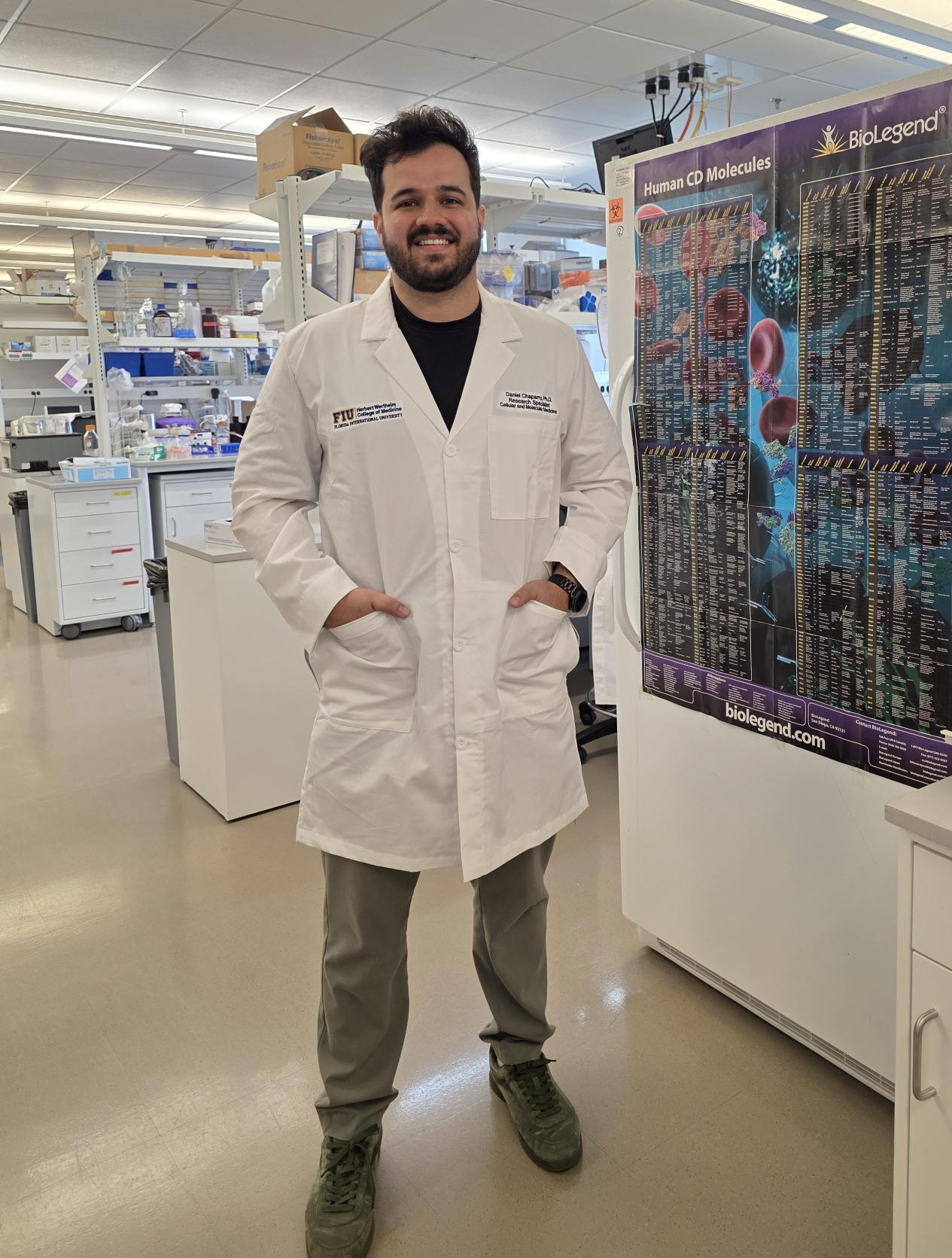
“Daniel has an outstanding work ethic,” Kalfa says. “He is a phenomenal researcher. The words that would characterize him are scientific rigor, passion and altruism.”
Kalfa adds that the award highlights these qualities in Chaparro. One example: Chaparro is using the award’s prize money to give back to undergraduate researchers.
“I’m going to be using part of the funds to establish a paid undergraduate research program in the Herbert Wertheim College of Medicine,” Chaparro says. “There are so many super talented undergraduate students that have to balance school and work. I want to help give more students the opportunity to be involved in medical research early. I want to help students who started out the way I did.”
Focus on the science: heart valves
Why exactly are valve transplants so critical? It goes back to those approximately 40,000 babies born with congenital heart defects. A portion of these children need heart valve transplants to survive.
Heart valves are the flaps of tissue that open and close as blood pumps between the heart and the rest of the body. If valves are not working properly, it could be devastating.
A heart transplant or temporary valve transplant must be performed on a child who has a valve that is irreparably damaged. Most valve transplant strategies do not currently allow a transplant to grow as the child grows in size. By the time a child is 18, he or she may have undergone five to seven open-heart surgeries to continue replacing heart valves.
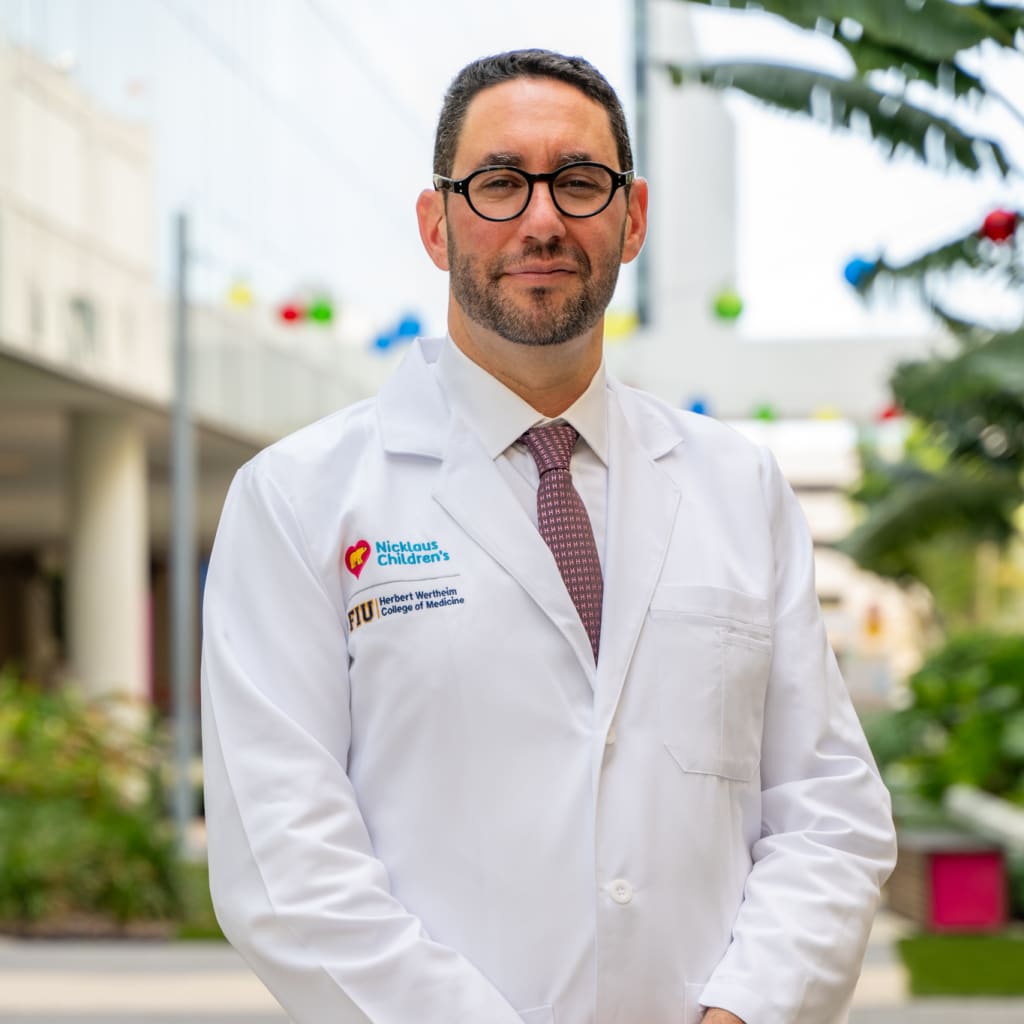 Kalfa (pictured here) is one of the doctors embracing a solution to this problem: partial heart transplants. Earlier this year, Kalfa led the first partial heart transplant performed in the state of Florida at the Nicklaus Children’s Hospital Heart Institute, marking a major advancement in pediatric heart surgery.
“Partial heart transplantation is redefining what’s possible in pediatric heart surgery,” Kalfa says. “By transplanting a living valve, we’re not just repairing a defect—we’re restoring heart function in a way that allows it to grow naturally with the child. Our goal is to move beyond temporary solutions and provide children with durable, life-changing outcomes.”
That’s why Chaparro’s work to extend the “shelf life” of heart valves for transplants can go a long way in helping save more and more children who may receive partial heart transplants.