

FIU recognized again as a national community engaged leader by the Carnegie Foundation
The university is one of only two R1 institutions in the country to receive multiple Carnegie designations that recognize research, public service and student success.
Community engagement is at the heart of FIU’s mission.
Panthers are making a difference in the world every day, whether through outreach programs that inspire local children to embrace education, nationally acclaimed research that directly addresses community concerns or experiential learning opportunities that allow FIU students to work closely with industry partners, non-profits and other organizations that serve the community.
In recognition of the university’s commitment to leading impact, FIU received the 2026 Carnegie Community Engagement Classification in late January — the third time the university receives the designation since 2010. The designation is awarded by the American Council on Education (ACE) and the Carnegie Foundation for the Advancement of Teaching. The recognition is one of the premier honors awarded in the country to a select group of institutions with a proven record of community engagement, strategic partnerships and public service.
Most recently, the university confirmed that FIU is one of only two institutions in the country to hold four prestigious designations from ACE and the Carnegie Foundation: R1 Very High Research Activity and Doctoral Production designation; Opportunity Colleges and Universities designation, which takes into account student success metrics and alumni salaries; and elective classifications in both community engagement and leadership for public purpose.
“FIU is proud to be recognized as a community engaged university, and we are honored to be among one of only two institutions that have successfully earned these four recognitions for our commitment to research excellence, student success and impact,” said President Jeanette M. Nuñez. “At FIU, we never compromise on excellence. If asked to choose between outstanding research and student success, we choose both. If asked to choose between scholarship and service, we choose both. FIU is a leader in higher education, and these designations confirm our excellence.”
Community engagement
Since the university’s inception, community engagement has been a key component of FIU’s identity. Today, the university’s dedication to community engagement is codified in its 2030 strategic plan, which outlines increased commitment to creating or strengthening strategic alliances and to establishing or deepening collaborations with public and private organizations, all with the goal of bolstering impact.
FIU’s earning the community engagement renewal recognizes years of community-building work and showcases FIU’s breadth and depth in serving the local and global communities. FIU’s community-related programs have received millions in funding from federal grants and many form the basis of robust, decades-long partnerships with recognized community institutions and national agencies.
Just a few examples of FIU’s community engagement initiatives:
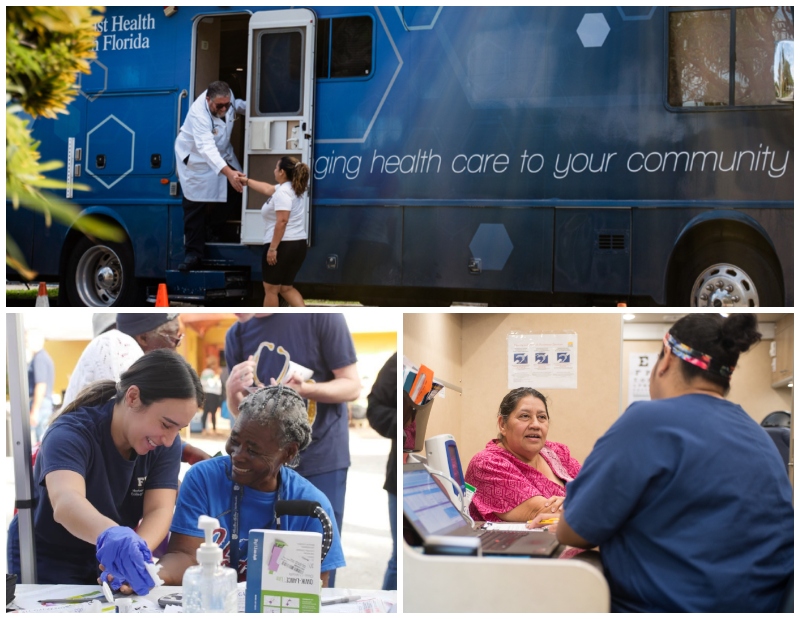
- NeighborhoodHELP: Through the Green Family Foundation Neighborhood Health Education Learning Program (NeighborhoodHELP), housed at the Herbert Wertheim College of Medicine, medical students along with students in areas like social work and nursing work with teams of medical professionals to provide health care through mobile health centers (vans that are set up at community sites). The program has improved the health and well-being of individuals for years by providing chronic disease management as well as lifestyle and wellness interventions. According to the latest data, program participants show a significant reduction in avoidable emergency department visits after enrolling in the program, with first-year participants showing a more than 50% reduction in emergency department visits.
- K-12 programming: FIU works on an extensive variety of programs and initiatives that serve local children. For example, the Center for Children and Families’ (CCF) Summer Treatment Program offers evidence-based interventions for children ages 6-12 with common mental health conditions such as ADHD. The nationally acclaimed program, which has been replicated across the country and in Japan, emphasizes family involvement through weekly parent sessions, equipping parents with effective strategies to manage their child’s behavior and support their success throughout the school year. Read just one example of how the program helped a child, Santiago (pictured below, center) and his family. Likewise, through the Education Effect program, FIU helps local K-12 students boost their academic achievement and educational outcomes, serving about 2,000 children each year. The program also provides parent trainings and often brings students to FIU campus tours and stimulates their interest in pursuing higher education.
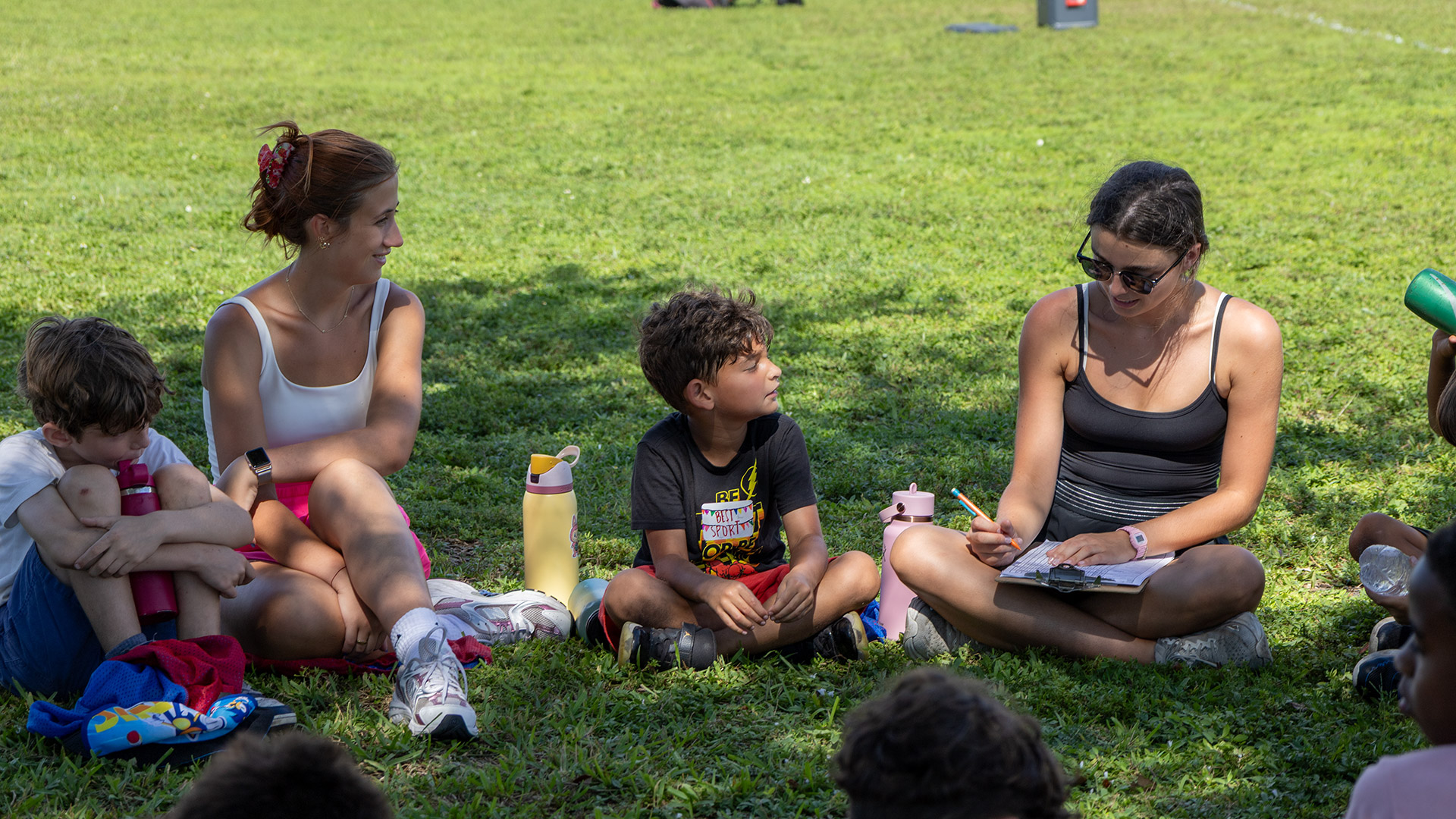
The Summer Treatment Program delivers the equivalent of seven years' worth of therapy in just one summer. Children learn how to manage emotions, improve behavior and build social skills through structured activities, academic support and daily coaching. (Photo credit: Brenda Ortiz / CCF)
- Florida Coastal Everglades Long Term Ecological Research Program (FCE LTER): This program, based at FIU’s Institute of Environment, exemplifies FIU research put to use for the good of the community. The FCE LTER Program is one of 28 sites in the U.S. National Science Foundation's Long Term Ecological Research (LTER) Network and is comprised of a multidisciplinary team of scientists, students, educators and research staff from FIU as well as universities and partner institutions across the country. The program works to reveal the causes and consequences of long-term change in coastal ecosystems such as at the Everglades. In collaboration with the Everglades Foundation, the program has provided over 138 briefings and 72 tours of the Everglades to local, state, national and international lawmakers, non-governmental organizations and community partners.
One of the key developments in the university’s strategy to deepen community engagement efforts has been the realignment of FIU’s Center for Community Impact & Public Purpose. The center serves as a convener for initiatives that connect the university’s academic experts with community needs and programs. The center is critical to identifying, tracking, stewarding, expanding and supporting projects across the university, often acting as an incubator for fledgling community-related projects.
“FIU’s mission as an anchor public research institution drives us to serve our students and work with our communities in their transformative efforts,” said Provost, Executive Vice President and Chief Operating Officer Elizabeth M. Béjar. “We know that FIU is an integral part of our South Florida community, and we are committed to continuing, deepening and creating even more strategic alliances, industry-institution partnerships and initiatives that act as catalysts for growth, student success, research excellence and prosperity in our community and beyond.”